


Jio Platforms, the digital and telecommunications business backed by billionaire Mukesh Ambani’s Reliance Industries, is preparing for a landmark stock market debut that could reshape India’s IPO market. The company is targeting approximately ₹30,213 crore, or around $3.2 billion, through its initial public offering (IPO), making it the largest public issue in India’s history if completed as planned.
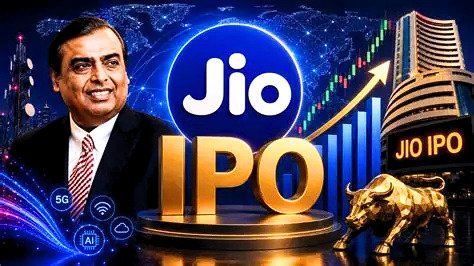
The IPO is scheduled to open for public subscription on October 21 and close on October 23, 2026. Jio Platforms has set a price band of ₹1,065 to ₹1,119 per share, placing the company’s implied valuation at approximately $108.3 billion at the upper end of the range.
The offering represents a major milestone for Reliance Industries and India’s technology sector. It will give public-market investors an opportunity to invest directly in a business that has become central to the country’s digital economy, spanning mobile connectivity, broadband, entertainment, enterprise services, cloud computing and artificial intelligence.
The scale of the offering also reflects the growing importance of digital infrastructure in India, where hundreds of millions of consumers and businesses increasingly depend on affordable internet access and online services.
Record Demand From Institutional Investors
Investor interest has already reached extraordinary levels ahead of the public subscription period. On October 19, Jio Platforms’ anchor investor book attracted bids worth more than ₹2.5 lakh crore against approximately ₹8,110 crore of shares allocated to anchor investors.
That represents demand exceeding 30 times the amount available in this portion of the offering. Jio Platforms allotted shares at the upper end of its price band, signalling strong institutional interest in the company’s public-market debut.
The investor pool includes major international asset managers, sovereign wealth funds and domestic financial institutions. Their participation highlights the attention that large global investors are paying to India’s technology and telecommunications markets.
However, anchor investor demand should not be confused with the subscription level of the entire IPO. Anchor investors receive allocations before the public bidding period, while retail investors and other eligible categories participate through the formal subscription process.
The strong anchor response is an encouraging early signal, but it does not guarantee that the IPO will be equally oversubscribed across all categories or that the shares will rise after listing.
Why Jio Platforms Is So Important to India
Jio’s influence on India’s telecommunications market began in 2016, when Reliance Jio introduced aggressively priced mobile data and voice services. Its arrival changed consumer expectations around internet affordability and forced competitors to reassess their pricing and investment strategies.
Over time, the business expanded beyond basic mobile connectivity. Its ecosystem now includes home broadband, digital entertainment, enterprise connectivity and other technology-enabled services.
According to reported company figures, Jio had approximately 533.3 million subscribers as of June 2026 and carried close to 60% of India’s data traffic. This enormous customer base gives the company a substantial distribution network for introducing additional digital products and services.
For investors, the appeal lies in the possibility that Jio can generate more value from its existing customer relationships. Mobile connectivity brings users into the ecosystem, while broadband, entertainment, cloud solutions and enterprise services offer additional opportunities for revenue growth.
The challenge is to convert this scale into consistent profitability while continuing to invest in network capacity, technology and customer experience.
How the IPO Will Work
Jio Platforms’ IPO is structured as a fresh issue of up to 27 crore equity shares. At the upper end of the ₹1,119 price band, the issue is expected to raise approximately ₹30,213 crore.
Because this is a fresh issue, the proceeds will go to the company rather than primarily to existing shareholders selling their holdings. A substantial portion of the money is intended to repay or prepay borrowings at Reliance Jio Infocomm, Jio Platforms’ telecommunications subsidiary. The remaining proceeds are intended for general corporate purposes, including capital expenditure.
The proposed listing will therefore provide Jio Platforms with a new source of public-market capital while helping address debt within its telecommunications business.
For eligible retail investors, the minimum application is 12 shares, corresponding to ₹13,428 at the upper price of ₹1,119 per share, before any applicable adjustments or charges.
The IPO also includes reserved portions for eligible employees and qualifying Reliance Industries shareholders, subject to the offer’s stated terms and eligibility requirements.
A Valuation of More Than $108 Billion
At the proposed upper valuation, Jio Platforms would rank among India’s largest listed companies by market capitalisation. The valuation reflects its enormous subscriber base, established telecommunications infrastructure and potential to expand into higher-value digital services.
Jio also benefits from its position within the Reliance Industries ecosystem. The parent company has developed businesses across energy, retail and digital services, providing strategic connections that may support further growth.
International technology investors, including Meta and Google, have previously invested in Jio Platforms. Their involvement has helped establish the company as a significant participant in the global digital economy.
Nevertheless, a valuation above $108 billion creates substantial expectations. Investors will need to assess whether future revenue, earnings and cash flow can justify the price attached to the business.
A large customer base is valuable, but long-term shareholder returns also depend on pricing power, operating costs, capital expenditure and the company’s ability to grow profits sustainably.
The Risks Investors Should Not Ignore
Despite the impressive demand ahead of the IPO, Jio Platforms faces several challenges.
Competition remains intense, particularly from Bharti Airtel and other telecommunications providers. Maintaining network quality and expanding services requires continued investment, while pricing decisions can affect profitability across the industry.
Regulation is another important consideration. Telecommunications rules, data-protection requirements and restrictions affecting digital advertising or data-driven services could influence the company’s monetisation strategy.
Jio’s future growth also depends on whether customers are willing to pay more for premium connectivity, entertainment, cloud computing and AI-enabled products. Expansion into new digital markets may create opportunities, but it can also require significant investment before generating meaningful returns.
Finally, investors must remember that a highly subscribed IPO can still list below its issue price. Market conditions, valuation concerns and broader investor sentiment can all influence post-listing performance.
What Happens Next?
The public subscription period is scheduled for October 21–23, 2026, with the listing currently expected on October 28, subject to the official timetable and completion of the IPO process.
The next important indicators will be demand across retail and institutional categories, the final allotment, the listing price and the market’s assessment of Jio’s growth prospects.
For Reliance Industries, the IPO represents an opportunity to bring one of its most important digital businesses into the public markets. For investors, it offers direct exposure to a company positioned at the centre of India’s growing digital economy.
Conclusion
Jio Platforms’ proposed $3.2 billion IPO is a landmark event for India’s capital markets. Its scale, valuation and extraordinary anchor investor demand make it one of the most closely watched public offerings of 2026.
The company’s vast subscriber base, telecommunications infrastructure and expanding digital ecosystem provide a compelling growth story. At the same time, competition, regulation, capital requirements and valuation risks remain important considerations.
The IPO’s ultimate significance will depend not simply on the amount of money raised, but on Jio Platforms’ ability to convert its market leadership into sustainable earnings and long-term shareholder value. If the offering proceeds as planned, it will mark a new chapter in the evolution of India’s digital economy and its public markets.
About The Author