

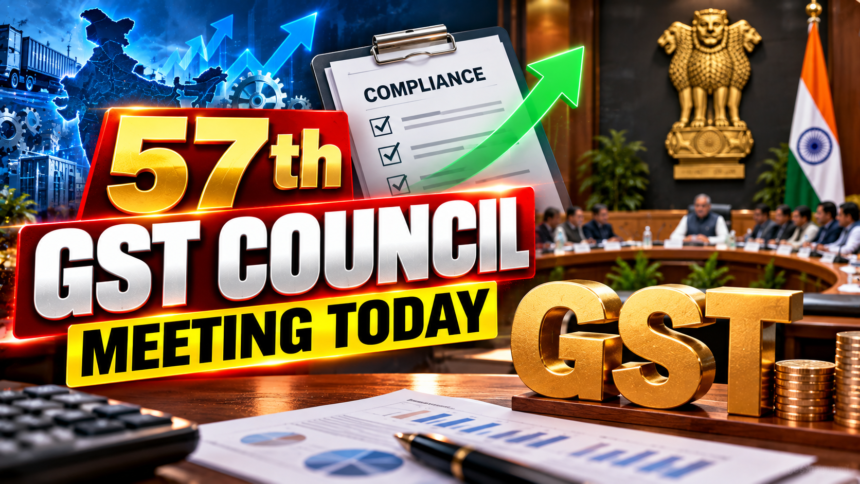
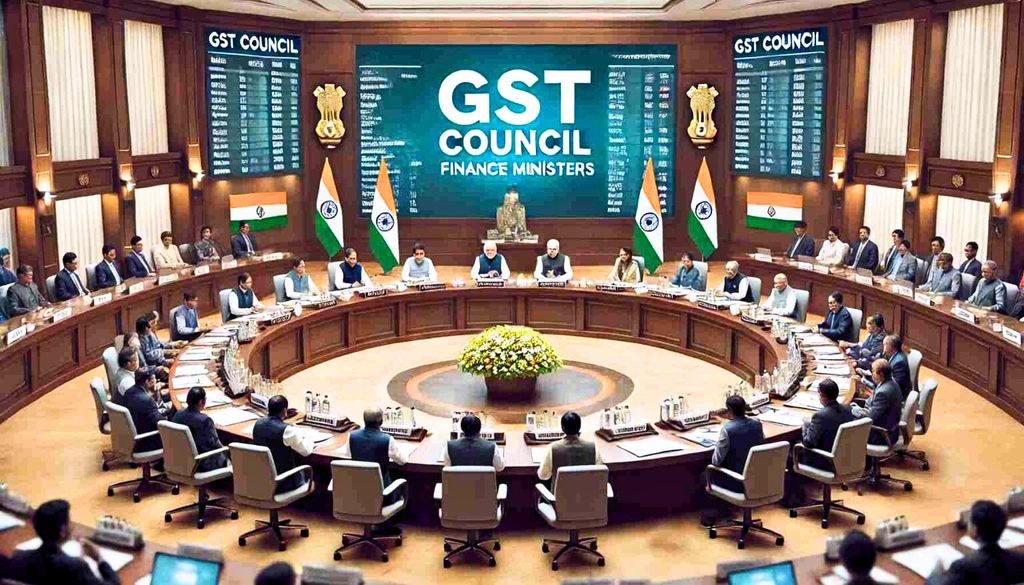
The 57th GST Council meeting is being held today, October 8, 2026, in New Delhi, with the government expected to focus on simplifying India’s Goods and Services Tax system rather than introducing another major round of rate changes. The meeting, chaired by Finance Minister Nirmala Sitharaman, comes as the government moves into the next phase of its GST reform programme, with greater emphasis on compliance, refunds, input tax credit and taxpayer services.
Unlike the previous major GST rate rationalisation exercise, the latest meeting is expected to concentrate on the day-to-day problems faced by businesses and taxpayers. The proposals under consideration could reduce paperwork, speed up tax refunds, make registrations easier and create a more predictable tax administration system for India Inc.
A Shift From Rate Changes to GST Compliance
The biggest feature of the 57th GST Council meeting is the change in focus. The previous major reform phase centred on GST rate rationalisation, while the current agenda is largely about improving how the tax system works in practice.
Businesses have repeatedly raised concerns about delays in refunds, difficulties in claiming input tax credit, lengthy registration procedures, tax notices and uncertainty surrounding enforcement.
The government is now considering measures intended to address these problems and make GST administration more technology-driven and risk-based. The objective is to reduce unnecessary friction for compliant businesses while maintaining safeguards against tax evasion.
Faster GST Refunds Could Improve Business Cash Flow
One of the most important issues being considered is the speed at which GST refunds are processed.
For exporters and companies that regularly accumulate input tax credit, delayed refunds can tie up substantial amounts of working capital. This can increase financing costs and make cash-flow planning more difficult.
A proposed mechanism could substantially shorten the refund process, including faster acknowledgement and processing of eligible claims. Reports have indicated that some proposals could provide for a maximum 10-day period for acknowledgement followed by seven days for processing in covered cases.
Faster refunds would be particularly relevant for companies with large export operations and businesses affected by inverted-duty structures, where the GST paid on inputs can exceed the tax applicable to final products.
Input Tax Credit Could Get Easier
Input tax credit is another major area of discussion.
Businesses have sought greater certainty over the ability to claim and utilise GST credits, particularly where genuine taxpayers face difficulties because of compliance problems at the supplier level.
The Council is expected to consider ways of making the ITC system more predictable and reducing situations where legitimate businesses face unnecessary disruption.
There are also proposals to unblock input tax credit on certain business-related expenses. Industry groups have been seeking changes covering areas such as employee-related expenses, travel and insurance, although the precise scope of any changes will depend on the Council’s decisions.
Simpler GST Registration for Businesses
GST registration is another area where reforms could directly affect businesses.
The government is considering ways to make registration faster and reduce procedural requirements, particularly for smaller and lower-risk businesses.
One proposal that could benefit MSMEs and e-commerce sellers would allow eligible small businesses to operate across states using a simplified registration framework rather than dealing with multiple registration-related processes.
For businesses expanding their warehouses, distribution networks or online operations across India, simpler registration could reduce administrative work and allow them to begin operations more quickly.
Fewer Notices and Greater Use of Technology
The government is also looking at reducing unnecessary tax notices and increasing automation.
Under the proposed approach, technology could be used to identify higher-risk transactions while reducing manual intervention for businesses with a strong compliance record.
This would represent a shift towards a more risk-based GST administration system. Instead of treating every discrepancy as a potential enforcement issue, the system could increasingly distinguish between deliberate tax evasion and technical or procedural mistakes.
For companies, fewer unnecessary notices could reduce the amount of time finance and tax teams spend responding to routine discrepancies.
Possible Changes to GST Enforcement
Another significant area under discussion is GST enforcement and criminal provisions.
Reports indicate that the Council may consider reducing or changing certain arrest powers available to GST officers, with proposals that could require greater judicial oversight in cases involving arrests. The broader discussion is linked to the government’s stated objective of creating a more proportionate enforcement framework.
The government is also considering changes to prosecution thresholds and the treatment of certain offences.
The intention being discussed is to create a clearer distinction between serious, deliberate tax fraud and technical or procedural defaults. Any final changes, however, will depend on what the Council approves and how the rules are subsequently implemented.
No Major GST Rate Change Is Expected
The October meeting is not primarily expected to deliver another broad-based GST rate restructuring.
Instead, the emphasis is on making the existing framework easier to use.
This is significant because businesses have already had to adjust to the major rate rationalisation undertaken during the previous reform phase. A period of greater stability in rates, combined with simpler procedures, could allow companies to focus more on implementing the tax changes already introduced.
The current approach therefore represents a move from changing what businesses pay toward improving how businesses interact with the GST system.
What India Inc Wants From the Meeting
For large companies, MSMEs and e-commerce businesses, the biggest priorities are likely to be faster refunds, smoother ITC utilisation, simpler registrations and fewer disputes.
Industry representatives have also called for clearer treatment of accumulated credits and greater certainty around expenses for which tax credits can be claimed.
These changes could have a direct effect on working capital. When refunds are delayed or credits become difficult to utilise, money remains locked within the tax system. Faster processing and greater certainty could therefore improve cash-flow visibility for companies.
The Bigger GST 2.0 Reform
The 57th GST Council meeting represents a broader transition in India’s GST reform agenda.
The first major phase focused heavily on creating a more rational rate structure. The next phase is increasingly concerned with the taxpayer experience and the efficiency of the administration itself.
For businesses, this could be just as important as changes to tax rates. A system with faster refunds, predictable ITC rules, simpler registration and fewer unnecessary disputes can reduce the cost of compliance and improve the ease of doing business.
The Council’s decisions today will determine how far India takes this next phase of GST reform. If the proposed measures are approved and implemented effectively, the changes could gradually make GST administration faster, more automated and less burdensome for compliant businesses across the country.
About The Author