

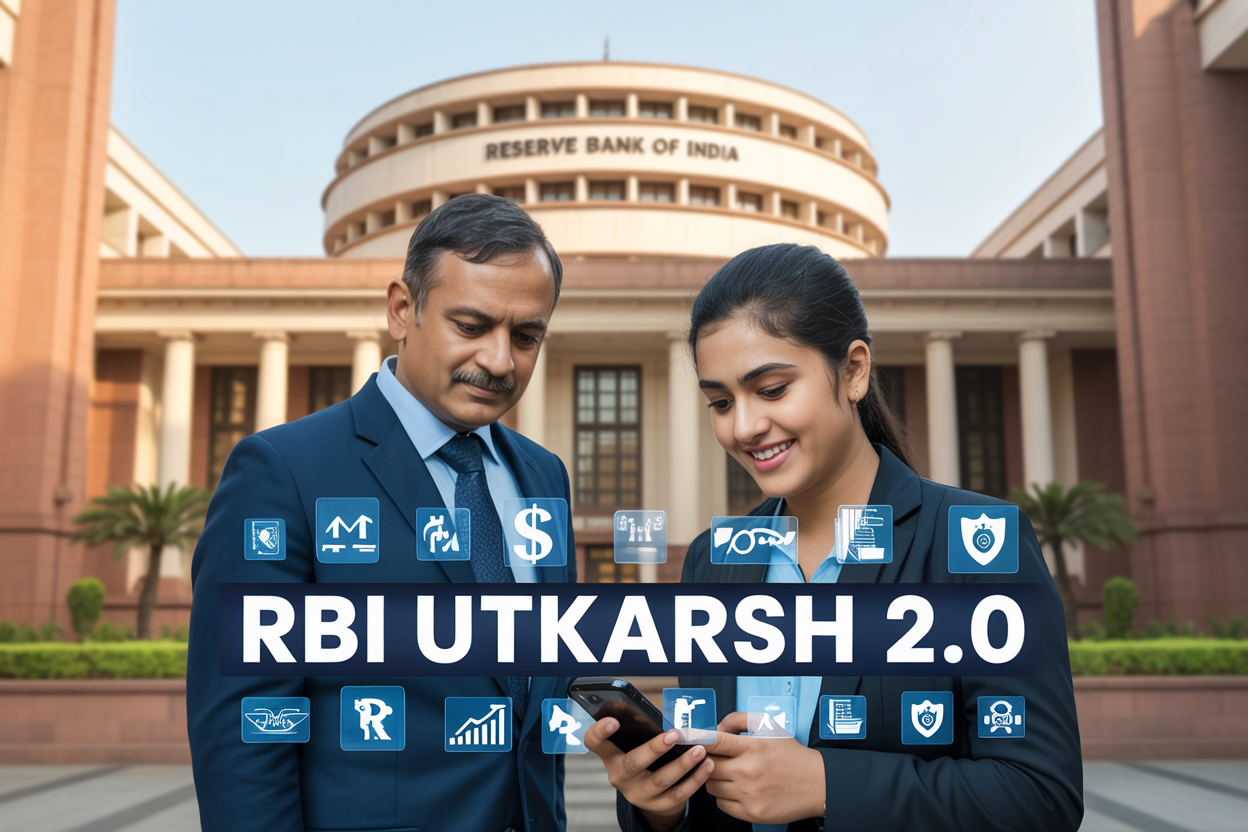
The Reserve Bank of India just rolled out Utkarsh 2.0, a major framework that’s set to reshape how you bank, invest, and manage your money. If you’re someone who uses banking services, invests in the market, or simply wants to understand how RBI monetary policy 2024 affects your wallet, this update is important for you.
This new strategy brings banking experience changes that focus on better customer service, enhanced digital features, and stronger financial protection. The Utkarsh 2.0 framework also promises to make financial services more accessible while improving how markets work behind the scenes.
We’ll break down what this means for your daily banking, how potential interest rate impact could affect your savings and loans, and the financial inclusion benefits that make banking easier for everyone. You’ll also learn about the improved risk management measures that better protect your money in this evolving financial landscape.
Understanding RBI’s Utkarsh 2.0 Framework

Key differences from the original Utkarsh plan
The RBI Utkarsh 2.0 framework represents a significant evolution from its predecessor, positioning itself as a comprehensive medium-term strategy framework with enhanced focus areas. Unlike the original plan, Utkarsh 2.0 introduces seven distinct strategy pillars: regulations, customer centricity, inclusive finance, competitive markets, effective technology, future-ready organisation, and global India focus. This expanded approach prioritizes digitisation and innovation across RBI operations while emphasizing improved customer service and financial inclusion. The framework specifically targets technology adoption, including artificial intelligence and digitalisation of internal processes, alongside efforts to strengthen market infrastructure and pricing transparency, particularly in government securities markets.
Timeline and implementation phases
The Utkarsh 2.0 framework follows a structured implementation approach with built-in flexibility to adapt to changing financial conditions. Progress under the framework will be monitored periodically, allowing the RBI to make necessary adjustments based on evolving market dynamics. This adaptive monitoring system ensures the framework remains responsive to India’s rapidly changing financial landscape while maintaining focus on the core strategic objectives. The phased approach enables systematic rollout of various initiatives across different sectors of the banking and financial services industry.
Primary objectives for India’s financial sector
The framework’s primary objectives center on transforming India’s financial ecosystem through comprehensive reforms and technological advancement. Utkarsh 2.0 aims to simplify regulations while deepening financial markets and enhancing accessibility for all segments of society. A key focus involves expanding India’s global financial footprint by promoting the internationalization of the rupee and scaling up cross-border payment systems such as UPI. The overall goal is to make banking sector reforms more effective by creating a simpler, more tech-savvy, and customer-friendly financial environment that supports India’s economic growth aspirations.
How Utkarsh 2.0 Impacts Your Banking Experience
Enhanced digital payment security measures
The RBI Utkarsh 2.0 framework introduces robust security protocols that make digital transactions safer for everyday banking customers. With enhanced encryption standards and multi-factor authentication systems, your online payments and mobile banking activities now benefit from bank-grade security measures. These improvements directly support the plan’s emphasis on improving customer service while making banking simpler and more tech-savvy for users across all demographics.
Faster loan processing and approval times
Utkarsh 2.0 streamlines lending procedures through automated verification systems and digital documentation processes. Banks can now process personal loans, home loans, and business credit applications significantly faster than traditional methods. This technological advancement aligns with the framework’s goal to make banking more customer-friendly by reducing waiting times and eliminating unnecessary bureaucratic delays in loan approvals.
Improved customer service standards
The framework mandates enhanced customer service protocols across all banking channels, from branch visits to call centers and digital platforms. Banks must now implement standardized response times, complaint resolution mechanisms, and personalized service offerings. These banking experience changes ensure that customer interactions become more efficient and satisfactory, directly reflecting the plan’s core objective of improving overall customer service quality.
Streamlined KYC and account opening procedures
Banking sector reforms under Utkarsh 2.0 simplify Know Your Customer (KYC) requirements and account opening processes through digital verification methods. New customers can now complete documentation online using Aadhaar-based authentication and digital signatures. This streamlined approach reduces paperwork, minimizes branch visits, and makes banking more accessible, supporting the framework’s vision of creating a simpler, more tech-savvy banking environment for all users.
Changes in Interest Rates and Investment Returns
Expected Shifts in Deposit Rates
With RBI Utkarsh 2.0 framework’s emphasis on strengthening financial markets, banks may adjust deposit rates to align with enhanced monetary policy transparency. The framework’s focus on improved market mechanisms could influence how banks price their deposit products.
Impact on Home Loan and Personal Loan Rates
The Utkarsh 2.0 framework may indirectly affect lending rates as banks adapt to the new regulatory environment. Enhanced market transparency could lead to more competitive loan pricing structures, though specific rate changes will depend on broader RBI monetary policy 2024 decisions.
New Opportunities in Government Securities
RBI Utkarsh 2.0 aims to strengthen financial markets and bring more transparency, especially in government securities. This enhanced transparency in the government securities market creates new investment opportunities for retail investors, making these traditionally institutional products more accessible and potentially offering better returns through improved market mechanisms.
Enhanced Financial Inclusion Benefits
Expanded access to banking in rural areas
The RBI Utkarsh 2.0 framework prioritizes enhancing accessibility for everyone by deepening financial markets in underserved regions. This initiative focuses on improving financial inclusion benefits by establishing more banking touchpoints in rural communities, ensuring that remote areas gain better access to essential financial services and banking infrastructure previously unavailable to them.
Simplified microfinance and small credit options
With the framework’s emphasis on improving financial inclusion, microfinance institutions and small credit providers will benefit from streamlined processes. The Utkarsh 2.0 framework aims to make small loans more accessible to rural entrepreneurs and individuals, reducing bureaucratic barriers while maintaining responsible lending practices that support sustainable economic growth.
Digital literacy programs for better financial participation
Now that we have covered infrastructure expansion, the framework also addresses the knowledge gap by promoting digital literacy initiatives. These programs ensure that improved accessibility translates into meaningful participation, helping rural communities understand and utilize modern banking services effectively while building confidence in digital financial transactions.
Support for women entrepreneurs and SHGs
Previously overlooked segments now receive focused attention under the RBI Utkarsh 2.0 initiative. The framework’s commitment to deepening financial markets includes dedicated support for women-led businesses and Self-Help Groups, ensuring that financial inclusion benefits reach gender-specific entrepreneurial ventures and community-based financial organizations that drive local economic development.
Risk Management and Your Financial Safety
Strengthened Banking Supervision Mechanisms
With RBI Utkarsh 2.0 framework implementation, banking supervision mechanisms receive significant reinforcement through enhanced monitoring protocols. Previously discussed monetary policy updates now integrate with advanced risk assessment tools, ensuring proactive identification of potential banking sector vulnerabilities and maintaining financial system stability.
Improved Deposit Insurance Coverage
RBI risk management strategies under Utkarsh 2.0 emphasize expanded deposit protection frameworks. Enhanced coverage limits and streamlined claim processes provide depositors with increased confidence in banking institutions. These banking sector reforms ensure comprehensive protection against institutional failures while maintaining public trust in the financial ecosystem.
Enhanced Cybersecurity Protocols for Online Transactions
Now that we have covered supervision improvements, cybersecurity enhancements emerge as critical components of RBI Utkarsh 2.0. Advanced encryption standards, multi-factor authentication requirements, and real-time fraud detection systems strengthen digital banking infrastructure. These protocols protect personal finance transactions while supporting seamless online banking experiences across all financial institutions.

RBI’s Utkarsh 2.0 represents a significant shift towards a more customer-centric, digitally-driven banking ecosystem that will reshape how you interact with financial services. From simplified regulations and enhanced transparency in government securities to improved accessibility through AI and digital innovation, these changes promise better banking experiences and stronger financial inclusion. The framework’s emphasis on competitive markets and technology adoption means you can expect more efficient services, better interest rate transparency, and enhanced safety measures for your investments.
As the RBI continues to monitor and adapt this framework to changing financial conditions, staying informed about these developments will help you make better financial decisions. The focus on rupee internationalization and cross-border payment systems like UPI expansion indicates exciting opportunities ahead. Keep an eye on how these changes unfold in the coming months – they could significantly impact your banking choices, investment returns, and overall financial planning strategy.
About The Author