

Global financial markets came under renewed pressure on Tuesday as investors reacted to rising oil prices, higher government bond yields and worsening uncertainty around the U.S.-Iran conflict. The combination has revived concerns about inflation and borrowing costs, even as recent U.S. economic data had reduced expectations of an immediate Federal Reserve rate hike.
The biggest move came in government bonds. The yield on the 30-year U.S. Treasury bond reached 5.321%, its highest level since June 2007. Yields also moved sharply higher in Japan and Europe, showing that concerns about inflation and government borrowing are spreading across major economies.
Oil Prices Add to Inflation Concerns
Oil has become one of the main sources of pressure for financial markets. Brent crude climbed to around $91 a barrel as hopes for a lasting U.S.-Iran peace agreement weakened. A senior Iranian official said Tehran could move toward a “fully offensive” military posture after ceasefire negotiations stalled.
Higher oil prices are important because energy costs affect transportation, manufacturing and household spending. If crude remains elevated for an extended period, businesses could face higher costs while consumers may have less money available for other purchases.
Europe is particularly exposed because of its dependence on imported energy. European natural-gas prices also rose, while Germany’s 10-year government bond yield reached its highest level since 2011. France’s 10-year yield also reached a 16-year high.
Stocks Fall as Investors Become More Cautious
The rise in bond yields is also hurting stock markets, particularly technology companies. Higher yields can make stocks less attractive compared with bonds and increase the cost of financing for businesses.
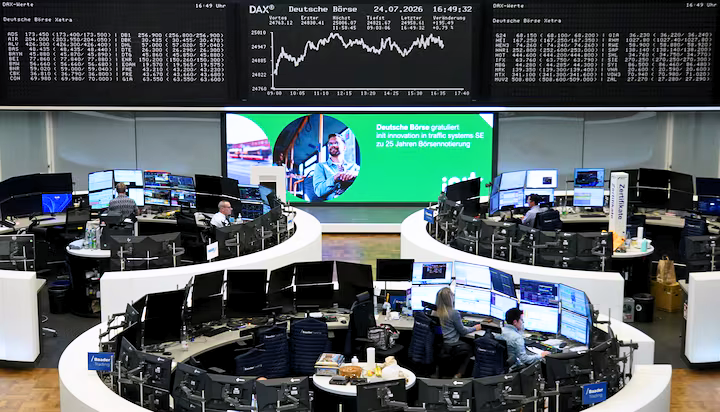
Wall Street’s major indexes fell to around two-week lows on Tuesday. The Nasdaq dropped 1.06%, while the S&P 500 fell 0.49% and the Dow Jones Industrial Average declined 0.12%. European stocks were also weaker, with the STOXX 600 down about 0.5% and heading toward its fifth consecutive session of losses.
Technology shares were among the biggest losers. The pressure is particularly significant for companies investing heavily in artificial intelligence infrastructure, because higher borrowing costs can make large AI investments more expensive and increase questions about how quickly those investments will generate returns.
Why Bond Yields Are Rising
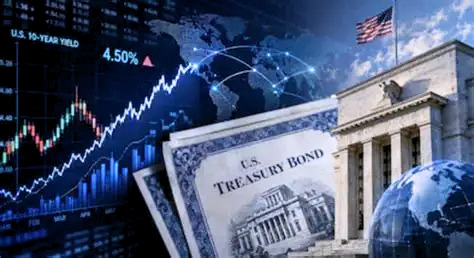
The increase in long-term bond yields is not being driven by just one factor.
Investors are concerned that higher energy prices could push inflation higher. At the same time, governments are carrying large debt burdens and continuing to borrow heavily. The conflict in the Middle East could also require additional government spending, adding to fiscal concerns.
Another factor is the enormous amount of money technology companies are raising to build AI infrastructure. Large corporate borrowing can compete with government bonds for investors’ money, potentially putting additional upward pressure on yields.
Interestingly, expectations for an immediate Federal Reserve rate hike have actually declined following softer U.S. economic data. Traders currently see about a 31% chance of a September rate increase, although the probability rises to around 68% by December.
That creates an unusual market situation: investors are less worried about an immediate Fed hike, but long-term borrowing costs are still rising because of inflation, government debt and geopolitical risks.
What Investors Are Watching Next
Markets are now looking toward the release of the Federal Reserve’s latest meeting minutes and next week’s Jackson Hole economic symposium. Investors will be searching for clues about how policymakers view inflation and the possibility of future rate changes.
The direction of oil prices will remain equally important. If U.S.-Iran tensions continue to worsen and energy supplies remain disrupted, markets could face further inflation pressure. On the other hand, progress toward a lasting ceasefire could quickly reduce some of the pressure on oil and bonds.
For investors, the current environment means that geopolitical developments are increasingly influencing financial markets. Higher oil prices, rising bond yields and falling technology stocks are creating a more cautious atmosphere after a period of strong gains.
The key question now is whether the rise in yields and oil prices will prove temporary or become a longer-lasting inflation problem. If the latter happens, companies, consumers and governments could all face higher borrowing costs, while central banks may find it harder to cut interest rates.
For now, global markets remain highly sensitive to developments in the Middle East, oil prices and central-bank policy. The next few weeks could therefore be important in determining whether markets return to their previous optimism or enter a more prolonged period of volatility.
About The Author