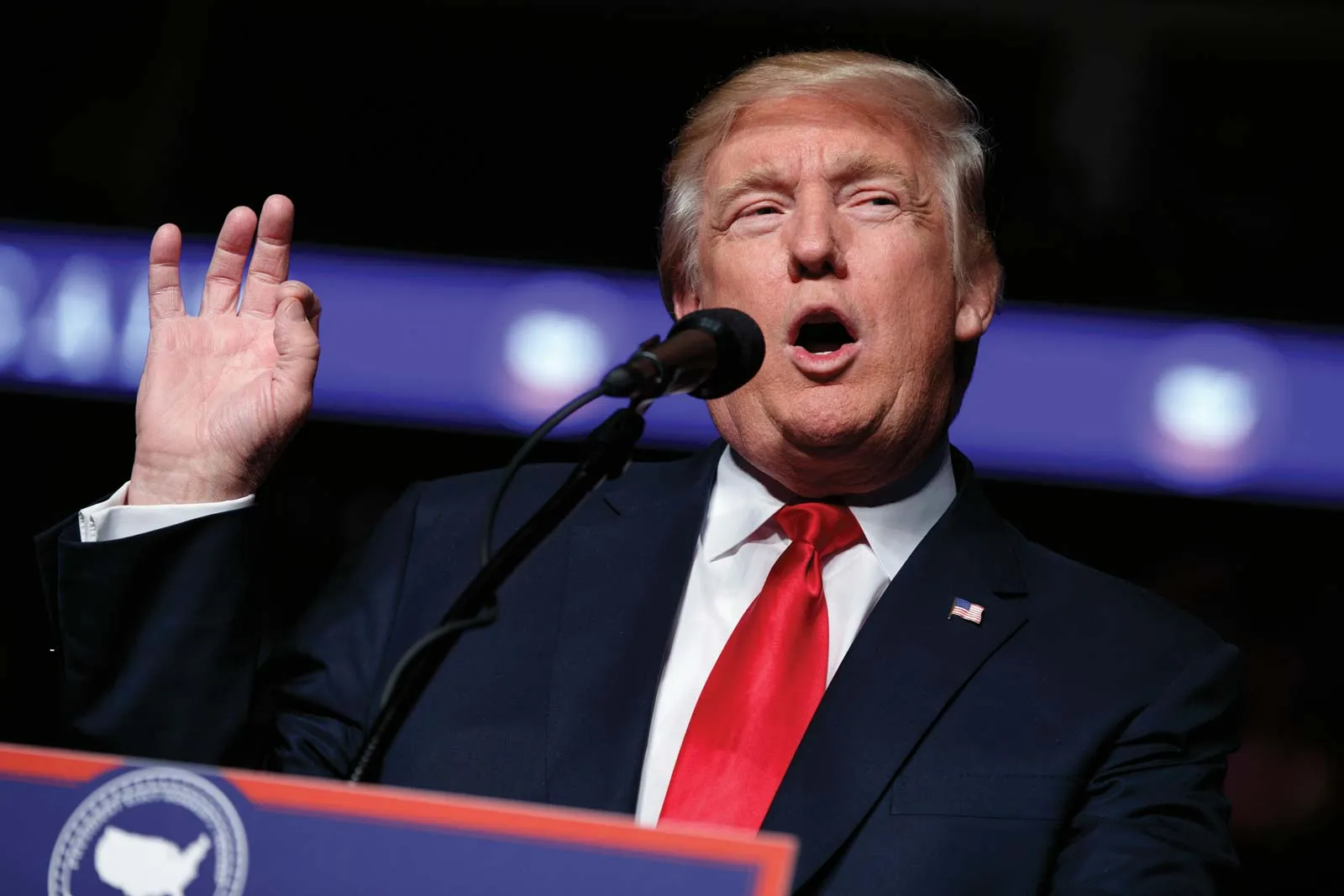

You read that right — U.S. President Donald Trump has slapped a 100% tariff on all Chinese imports, effective November 1, 2025.
The announcement, made at a rally and confirmed through Truth Social, represents the most aggressive retaliation yet in the long-running U.S.–China trade dispute.
Trump framed the tariff not as a general punishment for China’s trade policies, but as a direct response to Beijing’s restrictions on rare earth exports — materials critical to electronics, batteries, and defense technologies.
“If China is going to play hardball with our farmers and ranchers, we will too,” Trump declared. “The only way to bring fair trade is to make trade fair.”
The President described the move as “a matter of national security and fairness.”
Why It Happened?
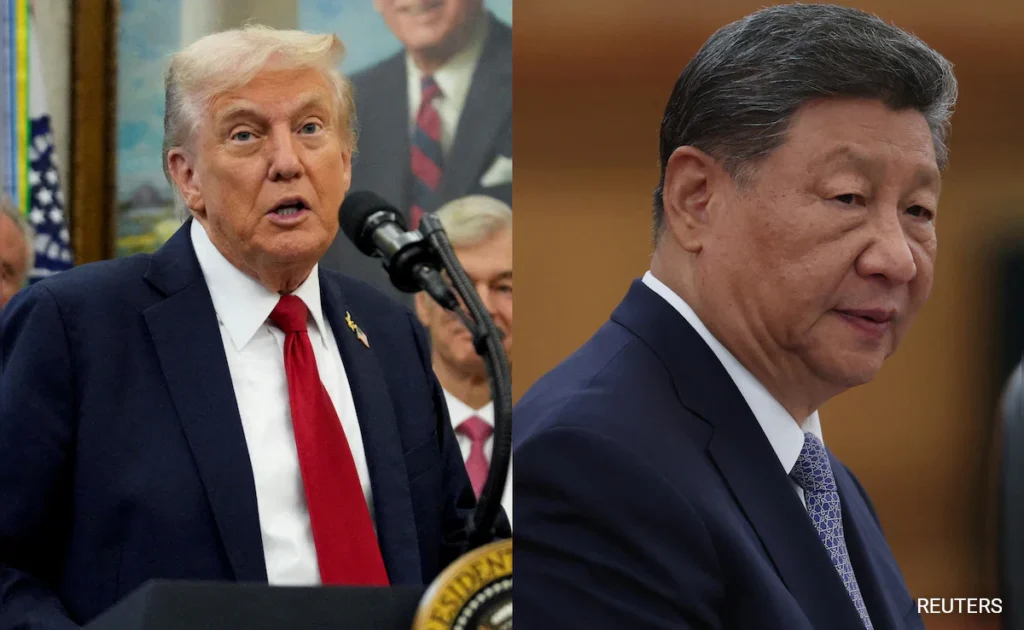
For years, Washington has accused Beijing of unfair trade practices, intellectual property theft, and supply chain manipulation.
The latest flashpoint came earlier this month, when China imposed new licensing rules for rare earth exports — vital inputs for U.S. high-tech manufacturing.
The Trump administration interpreted the move as economic blackmail — an attempt to pressure U.S. industries. In response, officials say, the 100% tariff is designed to “send a clear message” that America will no longer tolerate economic coercion.
Critics, however, argue the move is politically motivated, timed to project toughness ahead of the 2026 midterm elections rather than fix trade imbalances.
Markets React: Shock and Uncertainty
The announcement sent shockwaves through global markets. The Dow Jones Industrial Average plunged nearly 900 points, while the S&P 500 fell 2.7%. Tech, automotive, and manufacturing stocks — especially those dependent on Chinese supply chains — took heavy losses.
Economists warn that the tariffs could drive up consumer prices, fuel inflation, and slow U.S. growth. Everyday essentials — from smartphones and solar panels to clothing and cookware — are expected to cost more.
“It’s effectively a massive tax on the American family,” one Wall Street analyst said. “You’ll feel it in store aisles long before it hurts China’s bottom line.”
Still, Trump loyalists argue that the short-term pain is worth it to rebuild domestic manufacturing and reduce dependence on China.
China’s Response: Retaliation Looms
Beijing’s reaction was immediate and fierce. The Chinese Ministry of Commerce denounced the tariff as “economic bullying” and vowed to respond with strong countermeasures.
Analysts expect Beijing to target U.S. exports — particularly in agriculture, semiconductors, and aerospace — and to tighten regulatory pressure on American firms in China.
China also wields a powerful weapon: its dominance over rare earth metals. By further restricting exports, it could disrupt global tech and defense industries, sending ripple effects far beyond the U.S.
Winners, Losers, and the Ripple Effect
As the U.S. and China brace for impact, other nations are preparing to seize opportunity — or brace for fallout.
Manufacturing hubs like India, Vietnam, and Mexico could benefit as companies look for alternatives to Chinese production lines.
Indian exporters may gain ground in textiles, chemicals, and electronics, where China currently dominates U.S. imports.
However, experts warn that global supply chain instability and rising prices could quickly erase any short-term advantages.
Businesses that diversified after the 2018–2019 trade war will fare better this time, but those still deeply tied to China may face serious challenges.
Political and Legal Fallout
At home, the move has reignited debate over presidential authority on trade. Some legal experts question whether imposing such sweeping tariffs without congressional approval could face legal challenges.
Democrats and business groups have labeled the decision “reckless and inflationary.”
“This isn’t strategy — it’s shock therapy,” said one industry lobbyist.
Still, others see it as a strategic play to rebuild American industrial capacity and negotiate from strength.
According to the White House, the tariffs are “targeted and temporary,” suggesting they could be lifted if China eases its export controls. So far, there’s no sign that Beijing will do so.
Global Impact
The implications are massive. A 100% tariff effectively doubles the cost of Chinese imports — a blow not only to global trade but to confidence in the two largest economies.
If both sides dig in, the result could be a new trade war that rattles global supply chains, raises prices worldwide, and slows growth across Asia and beyond.
Financial experts expect continued market volatility until there’s clarity on how the tariffs will be enforced — and how China will retaliate. Diplomatic efforts to defuse tensions are underway, but neither side appears ready to back down.
Conclusion
The 100% tariff isn’t just a policy change — it’s a statement of intent.
For Trump, it signals strength to voters and toughness toward Beijing. For China, it’s an affront that demands a response.
Whether this ends as a temporary standoff or escalates into a full-blown trade war will depend on what happens before November 1. One thing is confirmed that global trade will become far more unpredictable due to this 100% tariff on China.
Table of Contents
Checkout More Content:
About The Author
