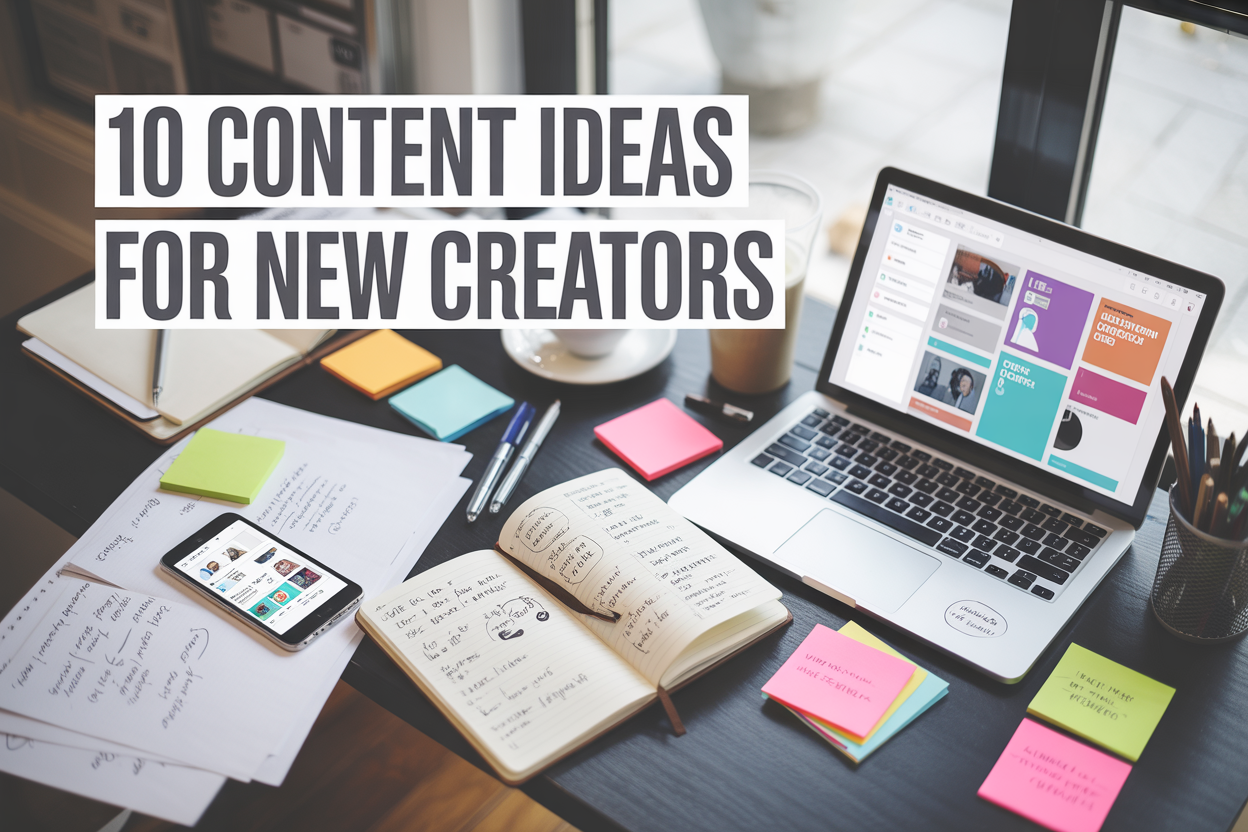
Starting your creator journey feels overwhelming when you’re staring at a blank content calendar. New creators often struggle with the same question: “What should I post?” This guide is for aspiring influencers, brand-new content creators, and anyone launching their first social media presence. You’ll discover content creation for beginners through proven formats that build trust, grow audiences, and establish your unique voice online.
We’ll walk through building a content foundation with strategic buckets that eliminate blank page paralysis. You’ll learn how to master educational content that delivers immediate value to your audience. Plus, we’ll cover behind-the-scenes content strategies that create authentic connections without oversharing your entire life.
These beginner content creator tips aren’t about chasing viral moments. They’re about creating sustainable systems that keep your creative content ideas flowing long after the initial excitement wears off.
Build a Content Foundation with Strategic Buckets

Strategic content buckets serve as categorization tools that organize your content into specific themes or topics, making it easier to plan and distribute across various marketing channels. Think of buckets like blog categories that help you create relevant content by providing clearly defined parameters to work within. This approach ensures a balanced and diverse content strategy while maintaining consistent messaging that aligns with your brand goals and keeps your target audience engaged.
1. Create Authority Content Through Frameworks and Systems
Educational content positions you as an authority in your niche by teaching something new and helping your audience understand your expertise. This bucket includes step-by-step tutorials, how-to guides, infographics, eBooks, and video content that provide immediate value. For example, if you’re a digital designer, creating tutorials on basic design skills demonstrates the value of your design templates while solving problems your audience faces. Educational content not only engages consumers but also establishes your brand as a go-to source of helpful information.
2. Share Relatable Real-Life Moments and Struggles
Behind-the-scenes content builds stronger, more personal connections with your audience by showing the person behind the brand. This bucket lets followers see your creative process and feel closer to your journey through production process sneak peeks, workspace tours, and personal milestones. Sharing the real-life highs and lows of your creator journey, including challenges you’ve overcome, can be very motivating to others while making your brand more relatable and memorable.
3. Deliver Value with Tutorials and How-To Guides
Practical advice and quick tips offer immediate value while helping you build trust with your audience. This content bucket demonstrates your knowledge and investment in helping others succeed through bite-sized advice, tool recommendations, and step-by-step guidance. Tips and hacks show that you’re knowledgeable and committed to your audience’s success, making them more likely to engage with your content and consider your products or services.
4. Showcase Proof Through Testimonials and Case Studies
User-generated content and testimonials build trust with your audience by showcasing positive customer experiences. When customers share testimonials about your products, it reinforces quality and increases the likelihood of new purchases. This bucket includes customer reviews, success stories, and UGC features where customers creatively use your products. Social proof through testimonials and case studies serves as powerful validation that motivates potential customers to take action.
5. Shift Beliefs by Debunking Myths and Sharing Unpopular Truths
News and trends content establishes you as an informed creator who stays up-to-date with industry developments while positioning yourself as an authority in your niche. This bucket includes trend reports, news commentary, and insights on recent industry developments relevant to your audience’s interests. By sharing relevant news about your industry and offering thoughtful commentary, you demonstrate expertise and keep your audience informed about important changes that affect them.
Master Educational Content That Delivers Immediate Value

6. Focus on Solving One Specific Problem Per Post
Educational content that delivers immediate value starts with addressing one specific problem your audience faces. When you focus on solving a single issue per post, you reduce cognitive load for learners and make your content more actionable. This approach allows your audience to extract and use the information more effectively, as they can concentrate on mastering one concept at a time rather than feeling overwhelmed by multiple topics.
7. Create How-To Content That Audiences Save and Share
How-to content represents one of the most shareable and valuable formats for new creators. This type of educational content provides immediate value by giving audiences practical, actionable steps they can implement right away. Keep your instructional content between six to twelve minutes for videos, or use clear, step-by-step formatting for written guides. Interactive elements like questions and practical examples enhance engagement and help learners apply the knowledge effectively, making your content more likely to be saved and shared across platforms.
Leverage Behind-the-Scenes Content for Authentic Connection

8. Show Your Creative Process and Work-in-Progress Moments
Behind-the-scenes content has become a powerful marketing tool because audiences crave authenticity and want to see the human effort behind finished products. Research shows that 90% of consumers consider authenticity a key factor when choosing which brands to support. Showing your creative process – from early sketches to content shoots – reveals the effort and creativity that goes into your work, making it more relatable and trustworthy for your audience.
9. Share Your Setup and Daily Workflow
Your work-from-home setup and daily workflow make excellent behind-the-scenes content for new creators. Film your home office arrangement, showing how you’ve optimized your space for productivity while maintaining authenticity. “Day in the life” content performing your daily tasks – from morning routines to evening wind-downs – creates engaging short-form videos that help humanize your brand and connect with followers on a more personal level.
Use Personal Stories to Create Emotional Connection

10. Balance Vulnerability with Purpose in Your Storytelling
Personal storytelling requires finding the sweet spot between being authentic and maintaining professional purpose. Rather than sharing random personal details, focus on experiences that directly connect to your expertise and audience’s needs. Every vulnerable moment you share should serve a clear purpose—whether demonstrating growth, illustrating a point, or showing relatability. This approach ensures your stories build trust while positioning you as someone who understands your audience’s struggles firsthand.
Bonus Ideas!
11. Share Mistakes and Lessons Learned for Credibility
Nothing builds credibility faster than admitting when you didn’t follow your own advice or made significant mistakes. These stories show your humanity while reinforcing your expertise through the lessons learned. When sharing failures, focus on the transformation—what you discovered, how you changed your approach, and what insights emerged. This vulnerability demonstrates that you’ve earned your knowledge through real experience, making your guidance more trustworthy and your content more engaging for new creator content ideas.
12. Connect Universal Experiences to Your Expertise
The most powerful stories bridge universal human experiences with your specific knowledge area. Whether it’s the stress of creative blocks, the pressure to use time wisely, or the fear of judgment, these common struggles create instant connection with your audience. By framing these shared experiences through the lens of your expertise, you create content that feels both personally relevant and professionally valuable, making your beginner content creator tips more memorable and actionable.
Study Successful Creators Like a Scientist

13. Analyze Content Structures Rather Than Copying Words
Successful content creation for beginners starts with understanding the framework behind engaging posts rather than replicating exact language. When studying top creators, focus on how they structure their content – the hook that grabs attention, the problem identification, solution presentation, and call-to-action sequence. This analytical approach helps new creators develop their own voice while leveraging proven patterns.
14. Identify Emotions and Frameworks That Drive Engagement
Beyond surface-level metrics, examine what emotional responses successful creators generate through their content strategy. Look for patterns in how they build tension, create curiosity, or provide relief through educational content. The reference tools mentioned show that analyzing engagement rates and audience responses reveals which emotional frameworks resonate most effectively with target audiences.
Keep Content Fresh Without Starting from Zero

15. Change Angles on Existing Topics Rather Than Finding New Ones
Rather than constantly searching for completely new content ideas, smart creators focus on refreshing their existing topics with different perspectives. The reference content reveals that 62% of traffic improvements come from just a few strategic refreshes, proving that changing angles is more effective than starting from scratch. You can transform a basic “how-to” post into a troubleshooting guide, convert a list of tips into a case study analysis, or update industry trends with current examples and data.
16. Document Your Process Instead of Only Showing Results
Now that we’ve covered angle changes, let’s explore process documentation as a content goldmine. Instead of only showcasing polished final results, document your behind-the-scenes journey, mistakes, and learning moments. This approach creates authentic connection while providing immediate value to your audience. Your process content can later be refreshed by adding new insights, updated methods, or lessons learned, creating a sustainable content creation system that grows with your expertise.
Build Systems for Sustainable Content Creation

17. Capture Ideas Immediately with Note-Taking Systems
Building sustainable content creation systems starts with capturing ideas the moment they strike. Research shows that 51% of content consumption comes from organic search, making consistent content production essential for new creators. Establishing a reliable note-taking system prevents valuable ideas from disappearing and creates a foundation for your content pipeline.
18. Separate Content Creation from Content Evaluation
Without documented workflows, teams struggle with collaboration, missed deadlines, and unpredictable production schedules. Smart creators separate the creative process from the evaluation phase to maintain momentum. This approach allows you to generate content freely without the internal critic slowing down production, then review and refine during dedicated editing sessions for better overall output quality.

Content creation doesn’t have to feel like starting from scratch every single day. By building strategic content buckets, mastering educational formats, and leveraging authentic behind-the-scenes moments, you create a foundation that generates ideas consistently. Personal stories and studying successful creators like a scientist provide the emotional connection and proven frameworks your audience craves. These aren’t just content types—they’re building blocks for sustainable growth.
The real transformation happens when you shift from hunting for inspiration to building systems that work. Document your process, revisit successful content from new angles, and remember that depth beats novelty every time. Your audience isn’t looking for perfection; they’re looking for consistency, value, and authentic connection. Start with these foundational content ideas, build your systems around them, and watch as content creation becomes less overwhelming and more strategic.
About The Author
