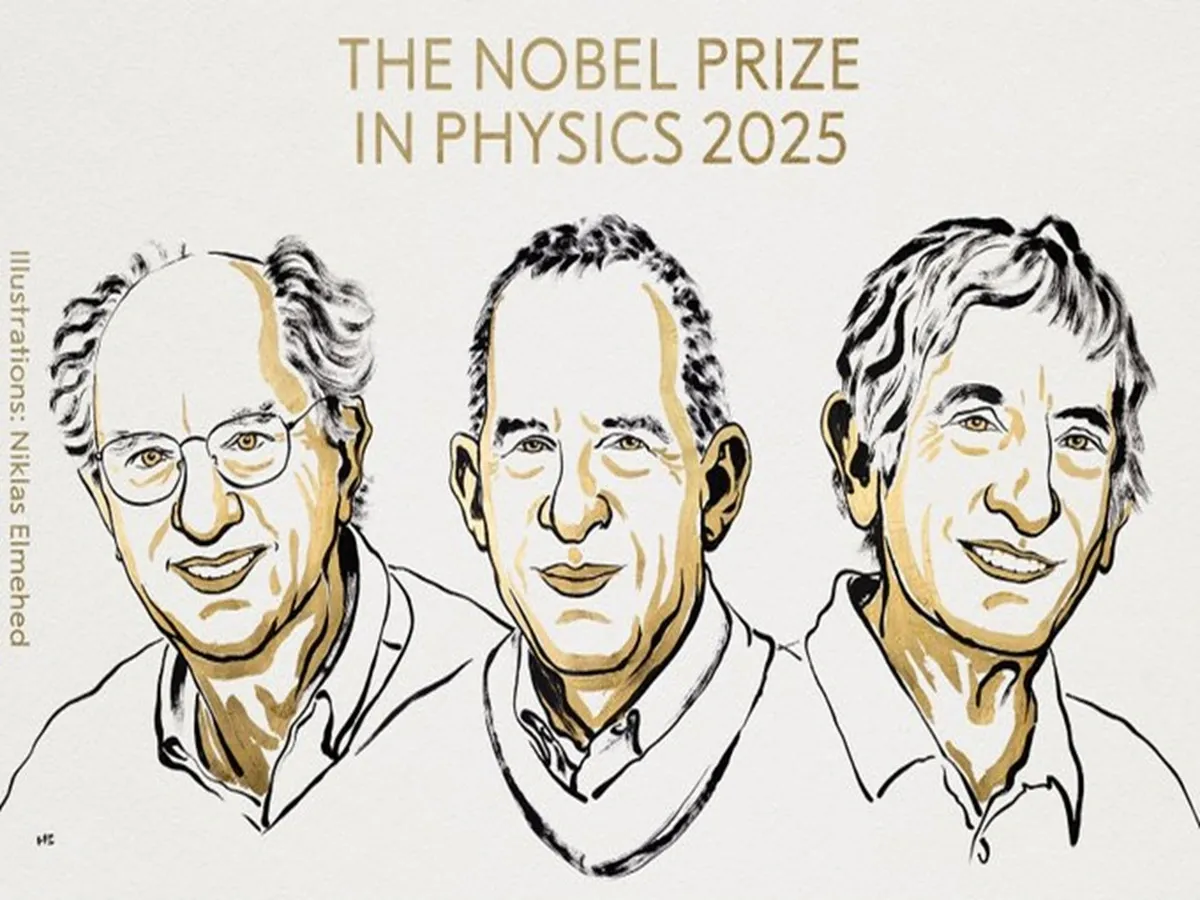
In a historic moment for science and technology, Google researchers have made headlines after their groundbreaking work in quantum physics earned them the Nobel Prize in Physics 2025. The award was jointly given to John Martinis, Michel Devoret, and John Clarke for their pioneering advances in quantum mechanics — particularly their research on macroscopic quantum tunneling of single charges and superconducting devices.
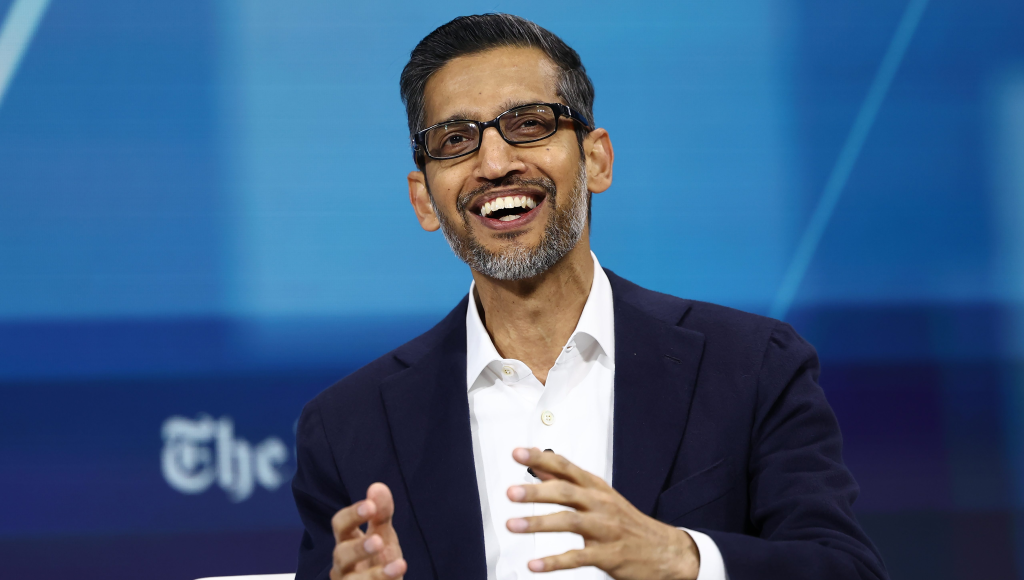
Google’s CEO Sundar Pichai celebrated the win with enthusiasm, posting on social media that he was “feeling lucky” to work with such visionary minds. With this win, Google now boasts five Nobel laureates, cementing its position as one of the world’s leading research-driven organizations.
Pichai tweeted:
Congrats to Michel Devoret, John Martinis, and John Clarke on the Nobel Prize in Physics. 🔬🥼 Michel is chief scientist of hardware at our Quantum AI lab and John Martinis led the hardware team for many years.
— Sundar Pichai (@sundarpichai) October 7, 2025
Their pioneering work in quantum mechanics in the 1980s made recent…
🧠 The Breakthroughs Underpinning the Nobel Prize in Physics
The recognized research focuses on quantum effects in macroscopic systems — rare phenomena usually observable only at the atomic or subatomic level. Through their work on Josephson junctions (superconducting circuits divided by non-conductive barriers), the laureates have revolutionized fields like quantum computing, precision measurement, and fundamental physics. The official Nobel Prize organisation tweeted an official post on Nobel Prize in Physics 2025.
BREAKING NEWS
— The Nobel Prize (@NobelPrize) October 7, 2025
The Royal Swedish Academy of Sciences has decided to award the 2025 #NobelPrize in Physics to John Clarke, Michel H. Devoret and John M. Martinis “for the discovery of macroscopic quantum mechanical tunnelling and energy quantisation in an electric circuit.” pic.twitter.com/XkDUKWbHpz
By successfully demonstrating that quantum tunneling and energy quantization could be engineered in practical electronic circuits, these scientists built a bridge between abstract theory and working technology. Their groundbreaking experiments in the 1980s laid a foundation that today’s advances in quantum computing continue to build upon.
🌍 Pichai’s Reflection: What It Means for Google?
In a heartfelt tribute, Sundar Pichai shared that he had visited Google’s Quantum AI Lab in Santa Barbara, describing the progress as “incredible.” He emphasized that the company’s long-term investment in quantum research had yielded not only technological breakthroughs but also a lasting scientific legacy.
His statement reflects deep pride — not only in the individual winners but also in the larger ecosystem of researchers, engineers, and support staff who have collectively pushed the frontiers of quantum science forward.
🔬 Why This Nobel Matters Beyond Technology
This award is more than a corporate victory — it marks a transformational moment for global science. The recognition underscores how quantum physics has evolved from a theoretical curiosity into a practical technological frontier.
The laureates’ research has significant implications for diverse areas like quantum computing, cryptography, and ultra-sensitive sensors. For countries and institutions engaged in the high-stakes global race for innovation, the Nobel Prize serves as a reminder of the strategic importance of investing in fundamental research.
Moreover, it acts as a source of inspiration for young scientists worldwide, motivating them to dream big, take risks, and dedicate themselves to long-term pursuits in emerging scientific disciplines.
🚀 Quantum India & The Future of Innovation
As the implications of this Nobel-winning research continue to unfold, attention now turns to how these discoveries will shape future technologies. For Google and other technology giants, the challenge lies in scaling quantum systems, minimizing computational errors, and making practical, stable quantum computers a reality.
Meanwhile, for nations like India, which already boast a deep reservoir of scientific talent, this achievement serves as a call to action. It may spur greater investment, collaboration, and innovation across academia, industry, and government institutions — all crucial for building a thriving quantum ecosystem.
This Nobel Prize reminds the world that the pursuit of knowledge has no boundaries — and that with vision, persistence, and collaboration, even the most complex mysteries of the universe can be unlocked.
Table of Contents
Checkout More Content:
About The Author
