

If you’re a worker, job seeker, or business leader wondering about AI’s real impact on employment in 2026, you’re not alone. Recent headlines scream about mass layoffs while new AI tools like GPT-5.3 and Claude Opus 4.6 can now do in seconds what used to take human teams months to complete.
But here’s what the data actually shows: AI replace jobs isn’t a simple yes-or-no question. While some positions are disappearing, entirely new roles are emerging, and many jobs are transforming rather than vanishing completely.
This guide cuts through the hype to give you the real story about AI job market 2026 trends. You’ll discover which industries and worker demographics face the biggest changes, why human AI collaboration is becoming the new normal instead of wholesale replacement, and most importantly, what practical steps you can take to build automation job security in your career.
We’ll cover the current job market reality beyond the scary headlines, examine how different worker groups are actually experiencing AI’s impact, and explore the essential skills that make workers irreplaceable in an AI-driven workplace.
Current Job Market Reality and AI’s Actual Impact

Recent layoffs aren’t primarily caused by AI implementation
Despite widespread headlines about mass layoffs from major companies like Amazon, Microsoft, HP, General Motors, and UPS, expert analysis suggests AI replace jobs concerns may be misplaced. Ritu Agarwal questions whether artificial intelligence is the primary driver of these employment changes, noting that clear cause-and-effect relationships haven’t been established and available data remains patchy.
Multiple economic factors driving employment changes
Rather than AI job market 2026 predictions coming true early, companies are reducing employment due to various economic pressures including tariffs, post-pandemic hiring corrections, and shareholder demands for reduced labor costs. A Pew Research Center survey reveals that 64% of Americans believe artificial intelligence job displacement will reduce jobs over the next two decades, demonstrating significant media hype versus actual data-driven evidence on current employment patterns.
How AI Affects Different Worker Demographics
Entry-level workers face greatest displacement risk
The current AI job market reveals a concerning trend for young professionals, with workers aged 22-25 experiencing rising unemployment rates across AI-affected sectors including manufacturing, finance, software engineering, marketing, and law. This demographic faces a particularly challenging double burden in the evolving workplace landscape.
Experienced workers gain advantage managing AI systems
In contrast to their junior counterparts, experienced workers with established knowledge and expertise find themselves in a more advantageous position. These seasoned professionals are essential for implementing and leveraging AI capabilities effectively, resulting in more stable unemployment rates. Their deep understanding of business processes and industry knowledge makes them invaluable for managing AI integration, while routine task automation primarily impacts entry-level positions in data entry, customer service, coding, design formatting, and document reviews.
Industries and Job Types Most Vulnerable to AI Replacement
Manufacturing and Factory Automation Leading the Change
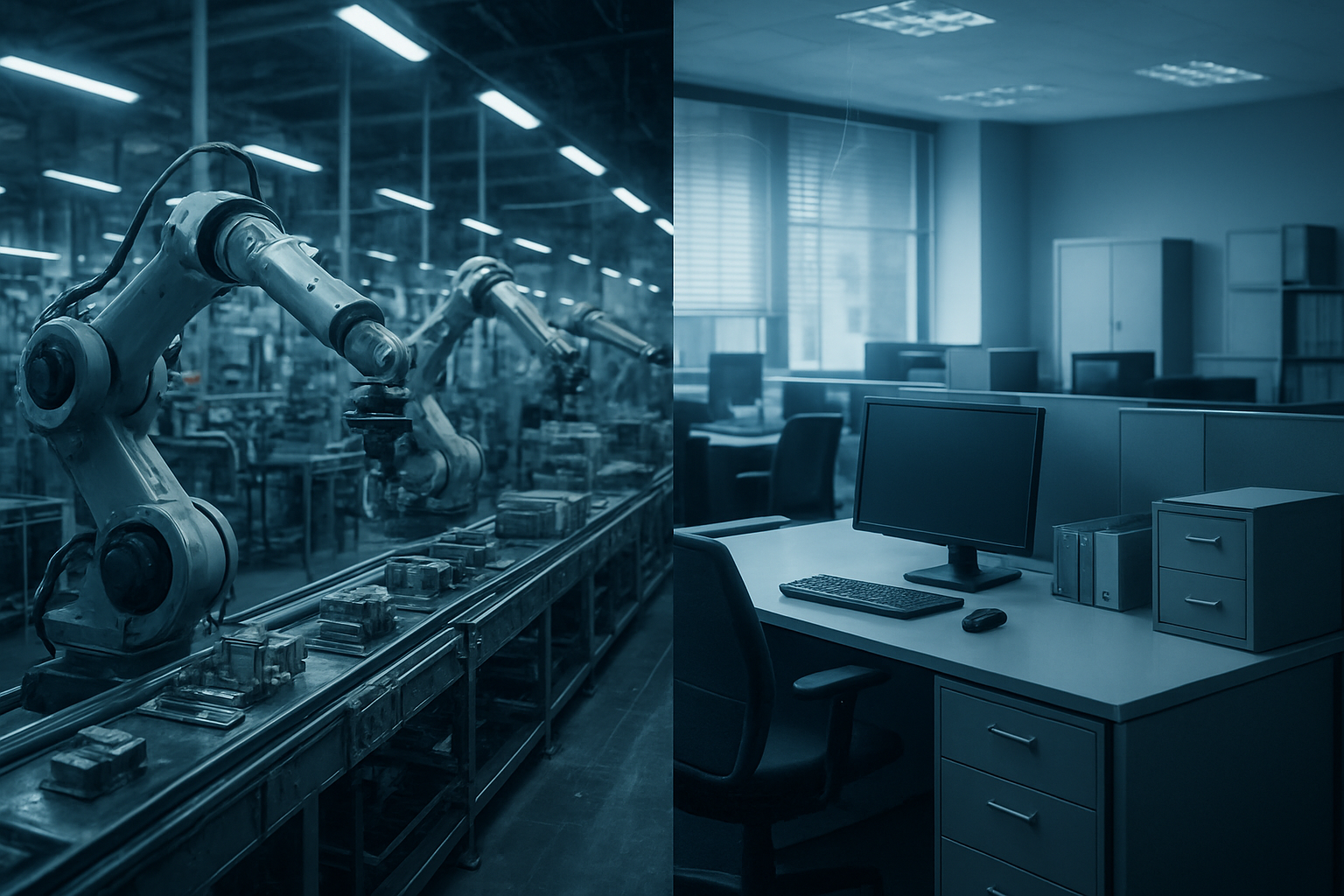
Manufacturing industries are experiencing unprecedented transformation as AI replace jobs through advanced robotics integration. AI-based robots excel at picking up and moving items, handling tasks that are naturally suited for artificial intelligence automation rather than human workers.
Coding and Software Development Transformation
The coding and software development fields face significant artificial intelligence job displacement as AI plugins now produce high-quality code autonomously. However, human software engineers remain essential for critical responsibilities including setting guardrails, testing products, and ensuring regulatory compliance. Data entry and customer service automation trends show routine tasks increasingly handled by AI systems, particularly impacting junior-level positions across these sectors.
The Rise of Human-AI Collaboration Models
Teaming approaches replacing full automation strategies
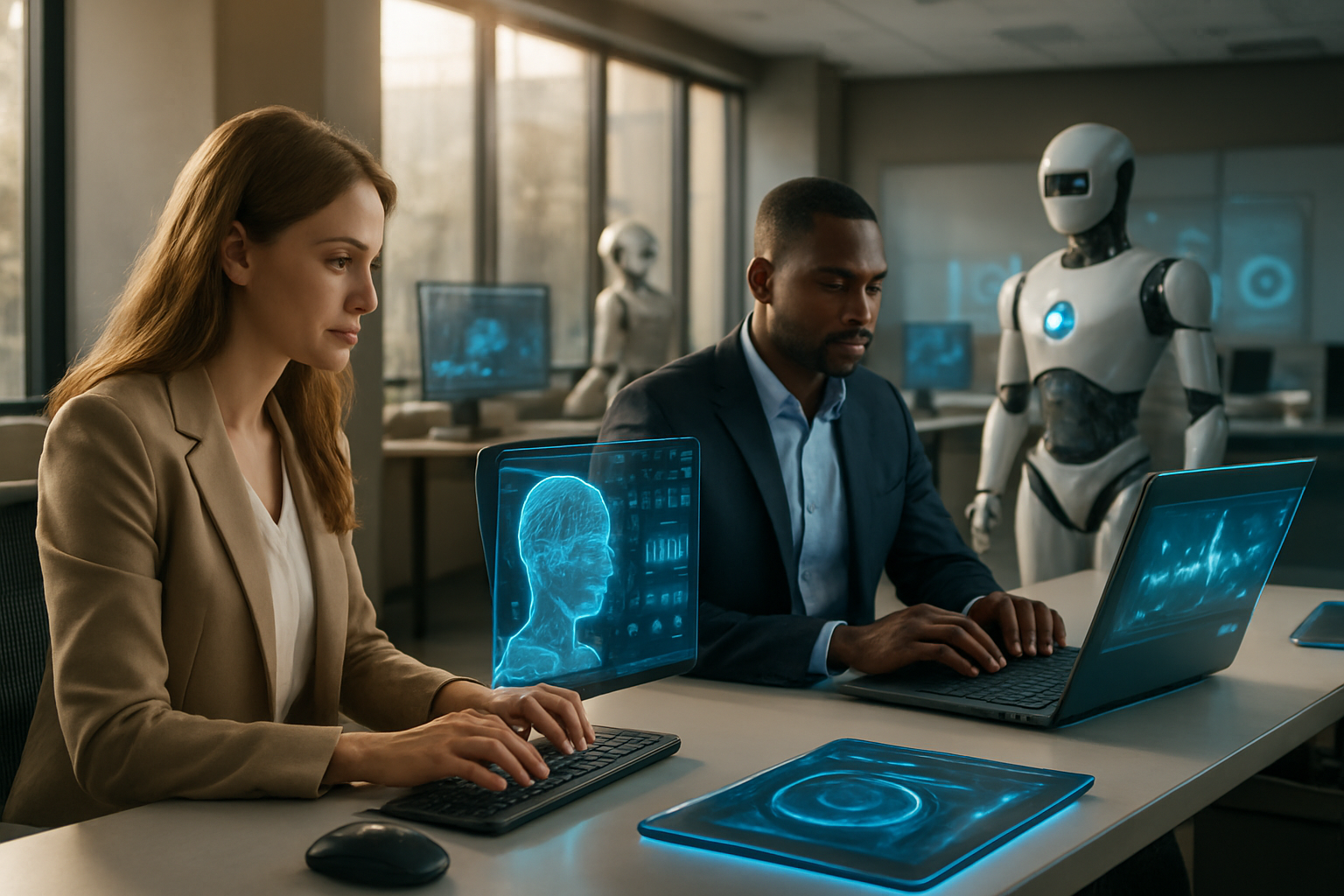
Human-AI collaboration models are revolutionizing the workplace by replacing traditional full automation strategies with sophisticated teaming approaches. These emerging frameworks involve individuals working alongside AI agents, typically featuring one or two humans collaborating with several AI agents on complex tasks. This shift represents a fundamental change in how organizations approach AI integration, moving away from complete job replacement toward enhanced human-AI partnerships that leverage the unique strengths of both human intelligence and artificial intelligence capabilities.
Redefined roles and responsibilities in AI-augmented teams
As human AI collaboration becomes more prevalent, organizations must carefully redefine roles and responsibilities within AI-augmented teams. Critical questions emerge regarding delegation, leadership, output verification, and quality control processes. These redefined structures require clear protocols for determining who leads specific initiatives, how tasks are distributed between human team members and AI agents, and establishing accountability frameworks. The success of these collaborative models depends on addressing these fundamental organizational questions while ensuring seamless integration between human judgment and AI processing capabilities.
Creative Industries Adapting to AI Integration
Writing and journalism evolving with AI assistance
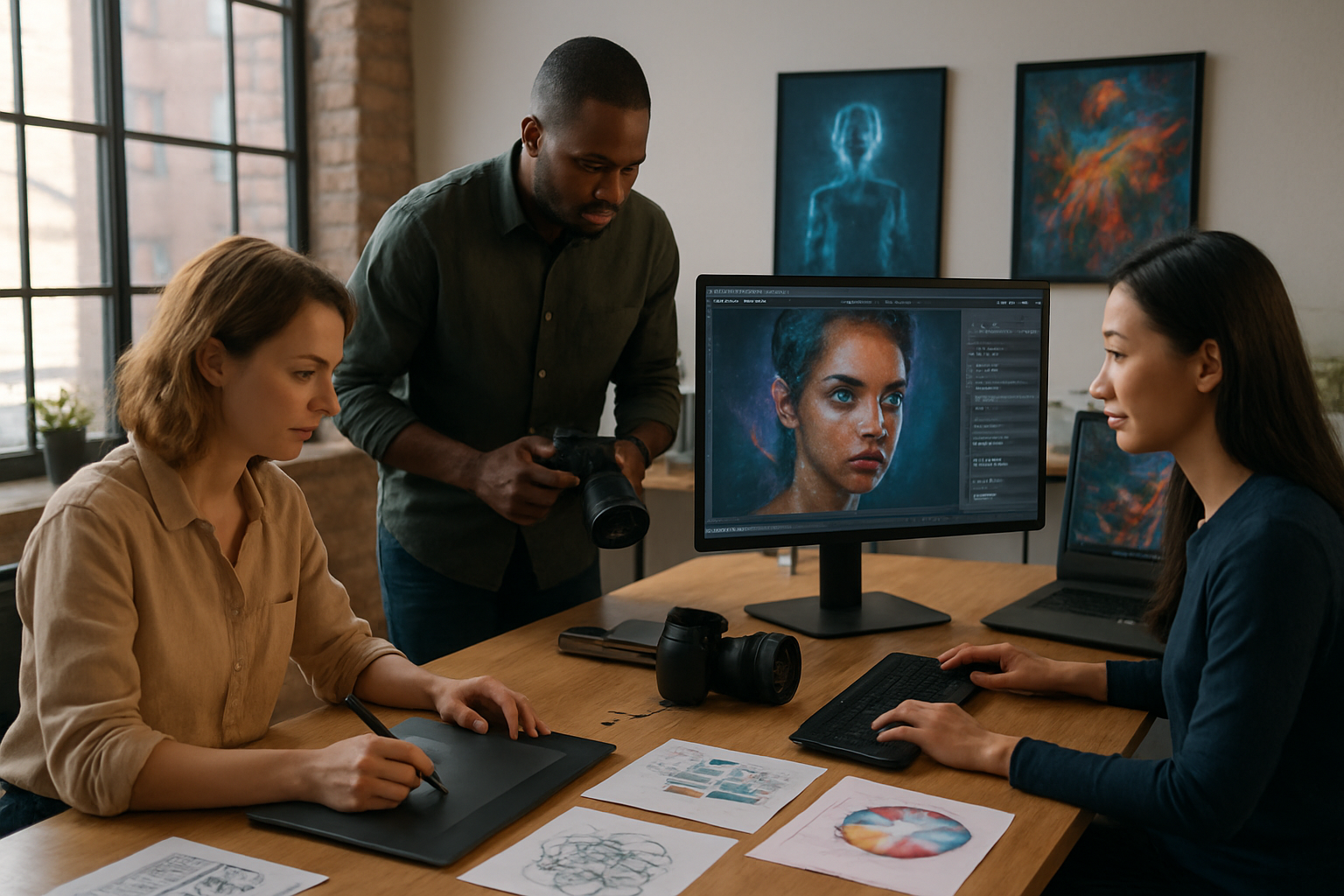
In fields like writing and journalism, AI can foster breakthroughs and be partnered with to create new content. This AI integration workplace transformation shows how artificial intelligence serves as a powerful tool for content creators rather than a replacement. Journalists and writers are discovering that human AI collaboration enables them to research faster, fact-check more efficiently, and explore new storytelling formats while maintaining their unique voice and perspective.
Design and entertainment industry transformations
Human creativity will continue to have a place, but it will be enhanced and augmented by powerful AI. The creative industries are experiencing unprecedented opportunities where AI tools amplify artistic vision rather than diminish it. This evolution demonstrates that AI resistant jobs in creative fields focus on conceptual thinking, emotional intelligence, and authentic human expression that machines cannot replicate, ensuring creative professionals remain essential in the future of work AI landscape.
Essential Skills for AI-Era Job Security
AI Literacy as the New Fundamental Requirement
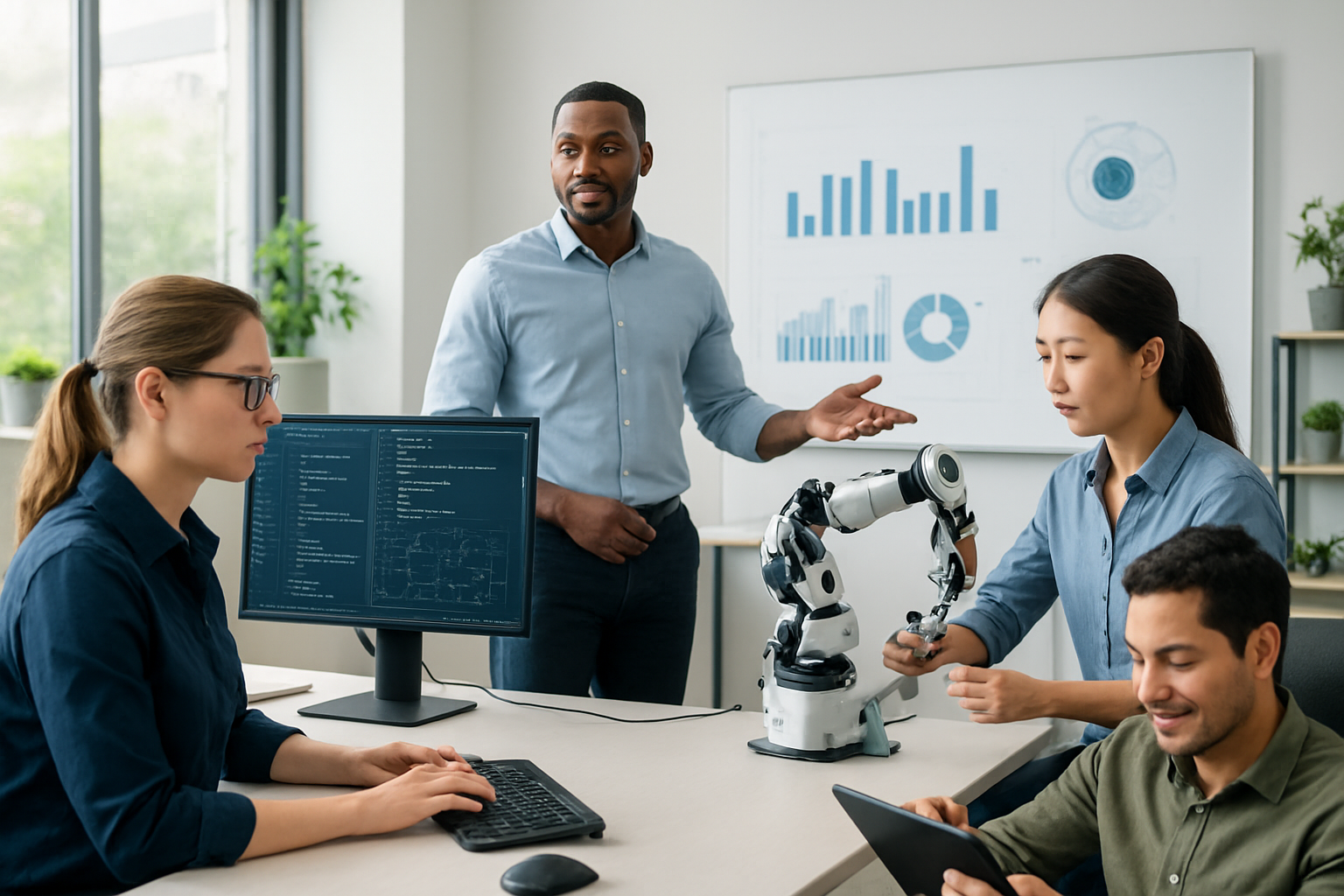
AI literacy is becoming a fundamental requirement across all industries, as understanding the technology and knowing how to use AI tools judiciously is critical to reduce fear and anxiety. Workers who develop fluency in AI applications gain a significant advantage in the evolving job market, positioning themselves as valuable collaborators rather than potential replacements.
Reskilling and Upskilling Imperative for All Workers
Reskilling and upskilling are imperative for all workers, as employers increasingly seek individuals who possess the skills and ability to work effectively with AI. This continuous learning approach ensures professionals remain relevant and competitive, while judgment and strategic thinking are becoming premium skills since AI systems require human oversight and guidance, especially in complex knowledge work where these qualities are less developed in younger workers.
Career Development Strategies in an AI-Driven Workplace

Mentor-intensive programs for junior employee development
With traditional entry-level positions becoming scarce due to AI integration, mentor-intensive programs emerge as the primary pathway for junior employees to develop critical workplace skills. These programs enable new professionals to learn directly alongside senior employees, developing judgment, strategy, and decision-making capabilities that AI cannot replicate.
Learning to work alongside AI systems effectively
As AI workplace skills become essential for career development strategies, professionals must become comfortable deploying AI tools appropriately while understanding their limitations. Building experience through collaboration rather than traditional entry roles requires mastering human-AI collaboration to remain competitive in the evolving job market.
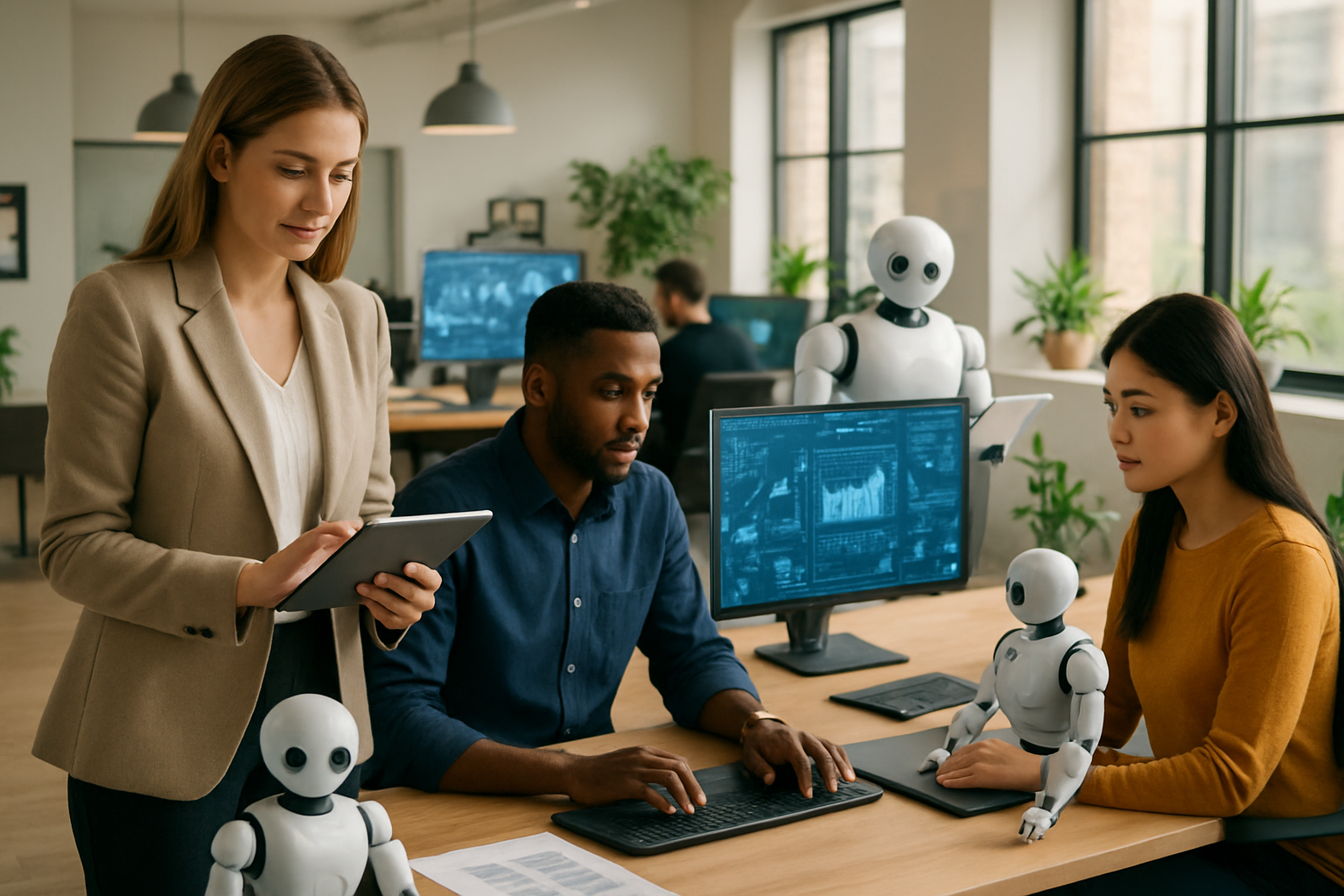
The evidence from 2026 reveals a nuanced reality: AI isn’t simply replacing human workers wholesale, but it’s fundamentally reshaping how we work. While routine tasks across industries face automation, the rise of human-AI collaboration models shows that the future workplace demands new skills rather than eliminates human value entirely. Entry-level positions may be disappearing, but experienced workers who can manage and implement AI systems remain essential. Creative industries are discovering that AI augments rather than replaces human creativity, opening new possibilities for innovation.
Success in this AI-driven landscape requires immediate action. Developing AI literacy isn’t optional—it’s critical for job security across all sectors. The axiom holds true: “AI won’t take your job, but somebody who knows AI will.” Workers must embrace upskilling opportunities, focus on developing judgment and strategic thinking that AI cannot replicate, and learn to work alongside AI as a powerful collaborator. The technology is already here, and those who adapt quickly by building these essential skills will thrive in the evolving job market of 2026 and beyond.
About The Author