

Getting views on YouTube feels impossible in 2026. You upload videos, check analytics obsessively, and watch your subscriber count stay frozen at 47. Meanwhile, random creators seem to blow up overnight with millions of views.
Here’s what changed: YouTube’s algorithm got smarter. The January 2026 Gemini AI update means the platform now understands your video content frame by frame, not just metrics. Gaming the system with clickbait and engagement bait is dead. The algorithm rewards creators who actually satisfy viewers.
This guide is for aspiring YouTubers stuck between 0-1000 subscribers and established creators wanting to crack the viral code. You’ll discover how YouTube’s algorithm changes in 2026 affect your reach, master click-through rates that unlock viral potential, and learn retention strategies that keep the algorithm pushing your content to more viewers. We’ll also break down the Shorts versus long-form debate and reveal timing secrets that maximize your video’s reach.
The data comes from VidIQ, TubeBuddy, and YouTube’s creator research. No fluff, just actionable strategies that work right now.
Understanding YouTube’s Algorithm Changes in 2026
How Gemini AI Integration Transformed Content Discovery
YouTube’s 2026 algorithm shift represents a fundamental transformation from traditional metrics-based ranking to AI-powered content understanding. The integration of advanced AI systems has enabled the platform to better comprehend what videos are actually about, rather than relying solely on engagement metrics. This change means YouTube can now match content to highly specific interest clusters, allowing creators to reach audiences based on topical relevance rather than subscriber counts. The algorithm now treats every upload as a fresh “seed,” evaluating whether it matches current viewer appetites and maintains engagement, fundamentally changing how content gets discovered.
The Shift from Metrics-Focused to Content-Understanding Systems
Previously, creators relied heavily on building subscriber bases to ensure their content reached audiences. However, YouTube’s 2026 algorithm prioritizes interest-based discovery over traditional fanbase metrics. The platform now focuses on connecting viewers with content through “shared special interests,” meaning creators don’t need existing audiences to achieve viral success. This transformation allows brand-new channels to gain massive traction within days while established channels with hundreds of thousands of subscribers may struggle if their content doesn’t align with current viewer interests. The algorithm’s improved ability to understand video content through audio analysis and keyword recognition has made topical relevance the primary ranking factor.
Why “Good Abandonment” Now Rewards Fast Value Delivery
The concept of “good abandonment” reflects YouTube’s sophisticated understanding of viewer behavior patterns. When viewers leave a video after receiving the information they need, the algorithm recognizes this as successful content delivery rather than poor engagement. This shift particularly benefits educational and problem-solving content where viewers may only need specific information segments. Creators who structure their content to deliver immediate value and clearly state keywords throughout their videos are rewarded with better discovery. The algorithm now distinguishes between abandonment due to dissatisfaction versus abandonment due to successful information retrieval, fundamentally changing retention strategy requirements for viral content success.
Mastering Click-Through Rates for Viral Potential
2026 CTR Benchmarks by Content Category
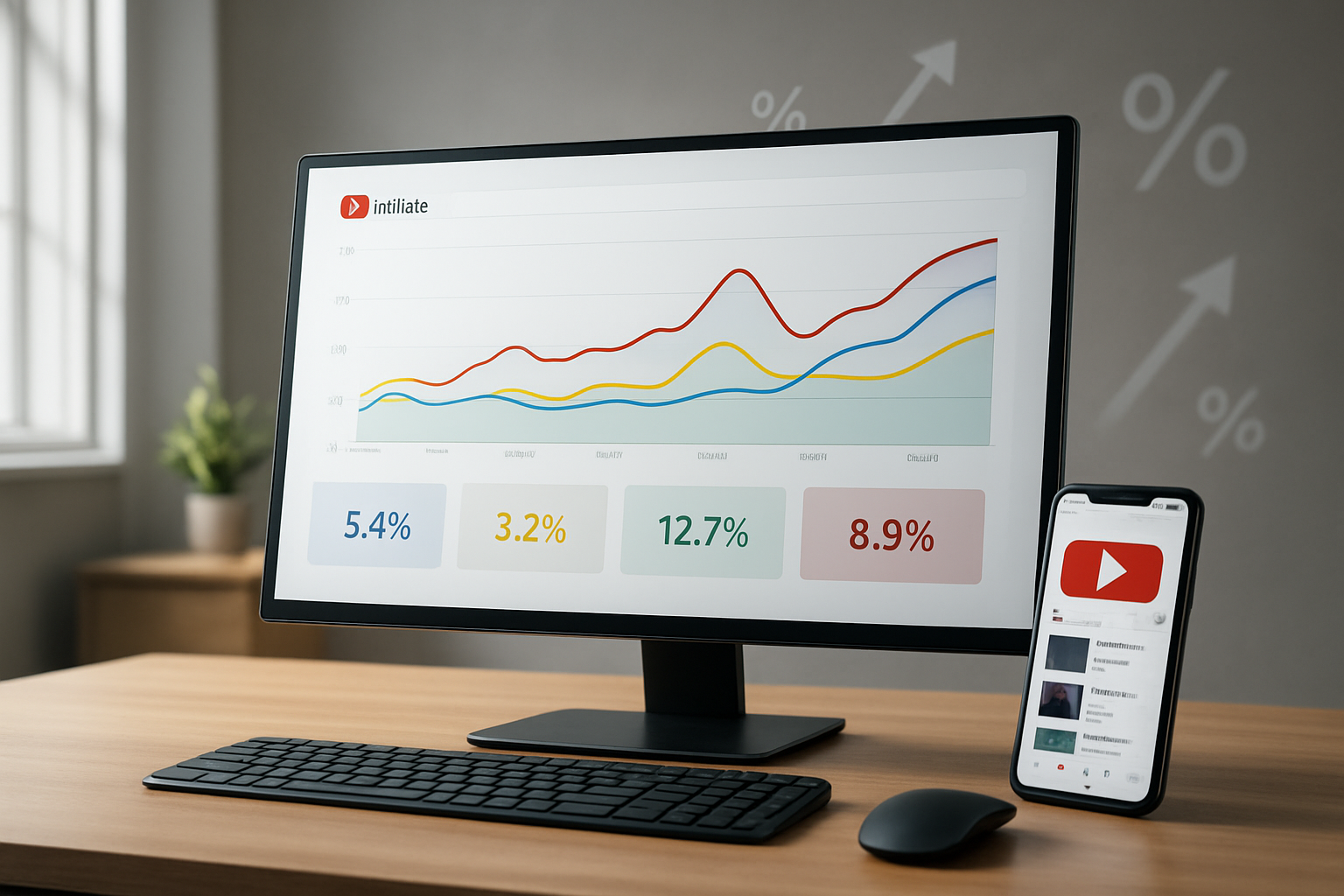
YouTube CTR performance varies significantly across different content categories in 2026. According to industry data, half of all YouTube channels maintain CTRs between 2-10%, with the average falling around 4-5%. Gaming and entertainment content typically achieves higher CTRs due to their visually engaging nature, while educational content may see slightly lower rates but benefits from longer watch times. Newer channels often experience CTRs on the lower end of this spectrum, while established creators with loyal followings can achieve CTRs exceeding 6-8%. Understanding these benchmarks helps creators set realistic expectations and identify opportunities for improvement within their specific niche.
How Traffic Sources Impact Expected CTR Performance
CTR performance fluctuates dramatically based on how viewers discover your content. Videos receive their highest CTRs immediately after upload when subscribers are notified, often achieving rates well above channel averages. However, as content gets picked up by YouTube’s “What’s next” recommendations and reaches broader audiences, impressions increase while CTR typically decreases. Search traffic generally produces moderate CTRs as viewers actively seek specific content, while browse features and suggested videos can vary widely depending on thumbnail effectiveness and audience alignment. Understanding these traffic source patterns allows creators to optimize content for different discovery methods.
Thumbnail and Title Strategies That Drive 9-10%+ CTRs
Achieving exceptional CTRs of 9-10% requires strategic thumbnail and title optimization. High-performing thumbnails incorporate human faces to build emotional connections, use high-contrast visuals that remain visible at small sizes, and include 3-7 words of overlay text that creates curiosity without repeating the title. Successful creators like The School of Life combine captivating graphics with intriguing questions, while channels like Red Bull use striking colors and real people imagery. Compelling titles should address viewer pain points while accurately representing content – avoiding clickbait that disappoints audiences. Testing different thumbnail and title combinations through A/B testing helps identify the most effective approaches for your specific audience and content type.
Retention Strategies That Keep the Algorithm Pushing Your Content

Duration-Based Retention Targets for Maximum Distribution
YouTube’s algorithm in 2026 prioritizes watch time above all other metrics, making retention targets crucial for viral potential. The most successful creators understand that the first 10-30 seconds determine whether viewers stay or scroll away. To maximize distribution, aim for at least 60% retention in the first minute, with gradual decline acceptable afterward. Videos maintaining 40% retention or higher throughout their duration consistently receive algorithmic boosts, while those dropping below 30% face reduced reach.
Crafting the Perfect Hook for First 30 Seconds
The cold open technique remains the most powerful hook strategy, where creators jump directly into a climax moment from their story. Start by showing the finished product or most compelling moment, then work backward to create mystery that motivates viewers to discover what led to that powerful scene. Another proven method involves raising the stakes early – introducing risk, impact, or rewards that give viewers compelling reasons to care about the outcome, similar to how successful creators subtly weave consequences into their opening sequences.
Using Re-engagement Points to Maintain Viewer Interest
Pattern interrupters serve as critical re-engagement tools throughout your video’s duration. Use quick cuts, surprising statements, and visual changes to combat attention fatigue during natural drop-off points. Incorporate B-roll footage, graphics, and animations to maintain visual stimulation beyond talking-head segments. Strategic calls-to-action placed at natural moments create deeper viewer connection without interrupting flow. Video chapters break content into digestible sections, helping viewers understand what to expect while providing clear progression markers that encourage continued watching through completion.
Choosing Between Shorts and Long-Form Content for Growth
Understanding the Discovery vs Revenue Trade-off
The fundamental challenge with YouTube Shorts vs long form content lies in balancing discovery potential against monetization opportunities. Shorts excel at rapid exposure, with creators like MacDannyGun gaining 670,000 new subscribers through viral short-form content, but revenue generation remains heavily skewed toward long-form videos. While Shorts typically earn $0.01-$0.30 per 1,000 views, long-form content can generate $5-$25+ per 1,000 views in premium markets. This creates a strategic dilemma: Shorts function as powerful discovery tools to introduce new audiences to your channel, but they won’t build substantial income streams on their own.
Why Combined Strategy Channels Grow 41% Faster
Creators who master both formats see exponential growth compared to single-format approaches. The most successful channels use Shorts as funnels, directing viewers from viral short videos into deeper, more engaging long-form content. This integrated approach allows channels to capture the algorithm’s preference for both quick engagement and sustained watch time. Channels implementing multi-format strategies see their content pushed more aggressively by YouTube’s algorithm because they’re feeding it both discovery signals from Shorts and retention metrics from longer videos, creating a compounding effect that accelerates overall growth.
Optimal Content Length and Watch-Through Benchmarks
YouTube algorithm 2026 prioritizes watch time and average view duration as key ranking factors. For Shorts, aim for 15-60 seconds with high completion rates, as these signal strong engagement to the algorithm. Long-form content should target 10+ minutes to maximize mid-roll ad opportunities and TV viewing potential, where viewers watch over 39 minutes daily with better retention rates. The sweet spot for viral potential combines both: use Shorts to hook audiences quickly, then transition them to 10-15 minute videos that build deeper connections and generate sustainable revenue through extended watch time and multiple ad placements.
Breaking Through the 0-1000 Subscriber Barrier
Creating Search-Focused Content for Early Growth
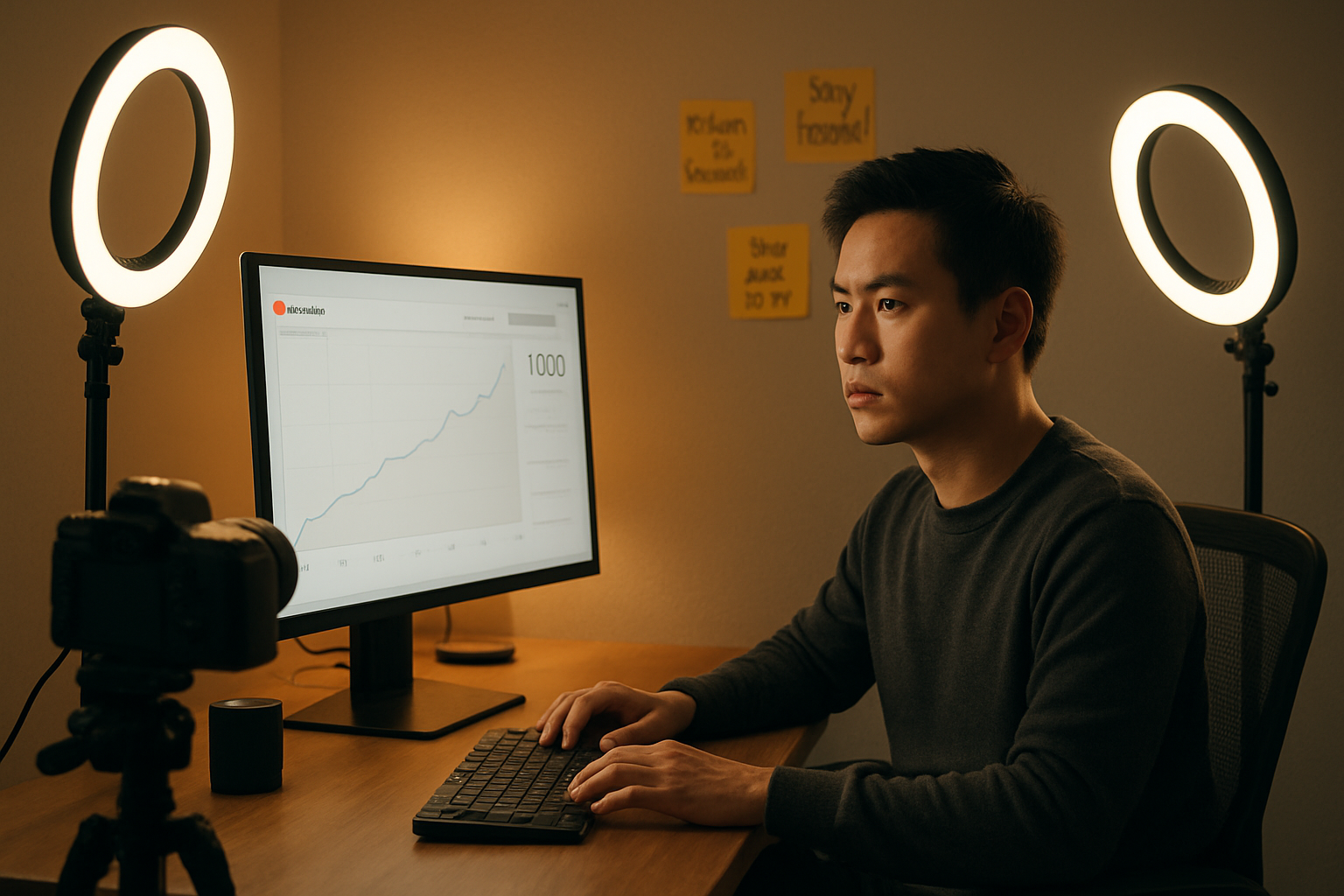
Getting your first 1,000 subscribers requires strategic content creation rather than perfectionism. Based on successful YouTuber experiences, creators should prioritize publishing 100 videos as quickly as possible instead of obsessing over perfect production quality. Many aspiring YouTubers waste valuable time purchasing expensive equipment and mastering complex editing software, which becomes overwhelming and destructive to motivation. The key breakthrough comes from posting consistently imperfect content using basic tools like phone cameras, allowing the algorithm to learn your audience preferences and gradually build subscriber momentum through regular uploads.
Avoiding the “Everyone” Trap with Specific Viewer Targeting
Successful YouTube growth stems from abandoning the broad “everyone” approach and instead focusing on specific viewer segments. Content creators who achieve their first 1,000 subscribers understand that targeting a defined audience creates stronger engagement rates and better algorithmic performance. Rather than trying to appeal to all demographics, successful channels identify particular viewer problems, interests, or needs, then consistently create content addressing those specific pain points. This targeted approach generates higher click-through rates and retention, signaling to YouTube’s algorithm that the content provides genuine value to a particular community.
Why Your First 48 Hours Determine Video Success
The initial 48-hour period after publishing determines whether YouTube’s algorithm will continue promoting your content to wider audiences. During this critical window, the platform evaluates key performance metrics including click-through rates, watch time, and engagement levels to decide if the video deserves broader distribution. Many creators experience the phenomenon of discovering their abandoned channels later gained significant traction, highlighting how early performance signals compound over time. Videos that perform well in their first two days receive algorithmic boosts that can lead to exponential growth, making those initial hours crucial for long-term channel success.
Timing and Frequency Optimization for Maximum Reach

Best Posting Times and Days for 2026 Performance
Now that we’ve covered retention strategies, mastering YouTube posting schedule optimization becomes crucial for viral potential. Based on comprehensive analysis of over 1 million videos, the optimal posting times are Wednesday at 4 p.m., Thursday at 4 p.m., and Monday at 4 p.m. Videos shared between 3 p.m. and 5 p.m. on weekdays consistently generate the highest median views.
The best days to post on YouTube are Tuesdays and Wednesdays, with engagement peaking during evening hours at 6 p.m. and 7 p.m. respectively. These prime-time slots capture viewers as they settle in after their workday. Friday afternoons (noon-5 p.m.) and Saturday late mornings to afternoons (11 a.m.-4 p.m.) also show strong engagement windows.
Sunday remains the worst day for posting, showing significantly lower engagement across all time slots. The worst posting times overall are between 3 a.m. and 5 a.m. when most viewers are asleep.
Platform-Specific Scheduling for Shorts vs Long-Form
With this timing foundation established, YouTube Shorts follow similar optimal posting patterns as long-form content. The best time to post YouTube Shorts is Wednesday at 4 p.m., with Thursday and Monday at 4 p.m. following closely. Since our analysis weighted median views of all YouTube videos including Shorts, both content formats benefit from the same 3-5 p.m. weekday posting windows.
However, Shorts can capitalize on slightly broader engagement windows due to their bite-sized format, making them more suitable for mobile consumption during commute hours and lunch breaks.
Quality vs Quantity Balance for Sustainable Growth
Previously covered engagement strategies must align with sustainable posting frequency. Consistent scheduling proves more valuable than posting frequency alone. The YouTube algorithm rewards creators who maintain regular upload patterns, whether weekly long-form content or daily Shorts.
Industry-specific timing variations show education content performs best on Wednesdays at 10 a.m. and Thursdays at 11 a.m. and 1 p.m., while retail channels see peak engagement on Mondays at 1 p.m. and Thursdays at 9 p.m. This data emphasizes the importance of understanding your specific audience behavior through YouTube Analytics’ “When your viewers are on YouTube” heatmap feature, which provides personalized insights based on your channel’s unique viewership patterns.
Common Mistakes That Kill Channel Growth

Weak Opening Hooks and Long Intros That Lose Viewers
Now that we’ve covered the technical aspects of YouTube optimization, let’s address one of the most critical mistakes that kills audience retention. The first few seconds of your video determine whether viewers stay or scroll away. Many creators make the fatal error of starting with lengthy introductions, assuming viewers need extensive context before diving into the main content.
The reference data reveals that creators often “skip introductions” entirely or create intros that are “too long, boring, or slow,” causing viewers to leave immediately. The solution is straightforward: hook viewers within the first 6 seconds with a compelling promise or intriguing question, then deliver value fast without burying the lead.
Inconsistent Niching That Confuses the Algorithm
Previously, we’ve seen how algorithm changes affect content discovery, but niche consistency remains fundamental to channel growth in 2026. One of the biggest mistakes creators make is producing random content without clear focus – posting gaming videos one day, tech content the next, then vlogs after that. This approach confuses both the YouTube algorithm and your potential audience.
The algorithm struggles to categorize your channel and identify your target audience when content spans multiple unrelated niches. Without clear categorization, YouTube can’t effectively recommend your videos to interested viewers. The solution requires choosing one specific niche and maintaining consistency, which helps build a loyal audience and significantly improves your channel’s algorithmic performance.
Poor Thumbnail-Title-Content Alignment Issues
With retention strategies in mind, the next critical growth killer involves misalignment between your video’s thumbnail, title, and actual content. Many creators treat thumbnails and titles as afterthoughts, uploading videos with basic titles and moving on, expecting quality content alone to drive discovery.
However, when thumbnails are blurry, boring, or hard to read, people simply won’t click on your videos. Poor thumbnail-title-content alignment creates a disconnect that damages your click-through rate and audience trust. The framework that works involves creating eye-catching thumbnails that accurately represent your content, using keywords your target audience searches for in titles, and ensuring your video delivers exactly what both elements promise. This alignment is essential for sustained growth in YouTube’s competitive landscape.
Essential Tools and Resources for Professional Content Creation
Free Video Editing Solutions for Beginner Creators
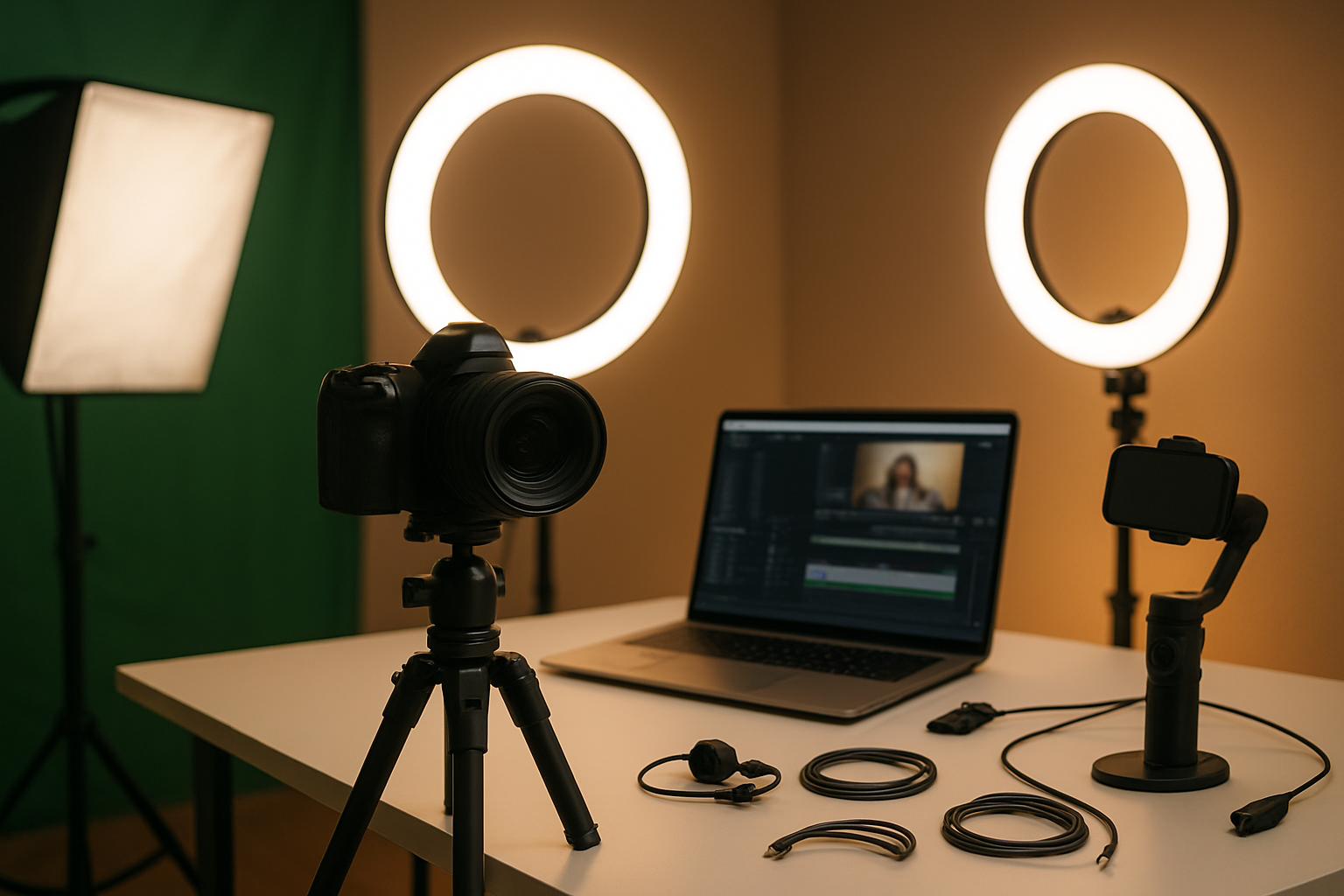
Starting your YouTube journey doesn’t require expensive software. DaVinci Resolve offers professional-grade video editing with powerful color grading tools completely free, making it ideal for creators seeking broadcast-quality results. CapCut provides versatile mobile and desktop editing with AI-powered features like automatic captions and special effects. For open-source alternatives, Shotcut delivers cross-platform editing with extensive format support, while Olive represents a promising free alternative to premium software. HitFilm’s free version includes robust editing capabilities that expand with paid plugins for advanced visual effects. These YouTube content creation tools enable professional-quality videos without upfront investment.
Analytics Tools for Keyword Research and Performance Tracking
Now that we’ve covered free editing solutions, understanding your content’s performance becomes crucial for viral growth. TubeBuddy serves as an essential Chrome extension offering comprehensive YouTube optimization tools, keyword research capabilities, and channel management features specifically designed for creators. Google Trends provides valuable insights into trending topics and audience interests within your niche, helping identify viral content opportunities. Social Blade enables performance tracking across platforms while allowing competitive analysis to benchmark your growth against successful channels. These analytics and measurement tools help creators track engagement metrics, reach statistics, and audience demographics essential for optimizing YouTube content strategy.
When to Consider Outsourcing Content Production
With performance tracking established, creators must evaluate when internal resources reach their limits. Consider outsourcing when video production demands exceed your available time or technical expertise. Synthesia offers AI-powered video generation where typed text creates realistic presenter videos, perfect for educational content without on-camera appearance. For creators managing multiple content formats, tools like Steve.ai automatically generate videos from existing blog posts or articles. Outsourcing becomes valuable when scaling content across platforms, managing complex editing projects, or requiring specialized skills like advanced motion graphics. The key indicator for outsourcing is when production bottlenecks prevent consistent uploading schedules that YouTube’s algorithm favors for viral potential.
YouTube virality in 2026 isn’t about luck or overnight success—it’s about understanding the algorithm’s new rules and consistently delivering value to your audience. With the Gemini AI integration fundamentally changing how content gets discovered, creators must focus on satisfying viewers rather than gaming metrics. The data is clear: channels combining Shorts for discovery with long-form content for revenue grow 41% faster, while maintaining CTR above 7% and retention above 50% unlocks the algorithm’s viral distribution power.
The path from zero to viral starts with mastering the fundamentals: compelling thumbnails that drive clicks, hooks that retain viewers in the critical first 30 seconds, and content that delivers on its promise quickly. Whether you’re breaking through the 0-1000 subscriber barrier or scaling to millions of views, success comes down to one principle—prioritize your audience. When you create content that genuinely serves viewers and consistently meets their expectations, the algorithm will reward you with the reach you’re seeking. Start implementing these strategies today, track your analytics weekly, and remember that every successful YouTube channel was once exactly where you are now.
About The Author